

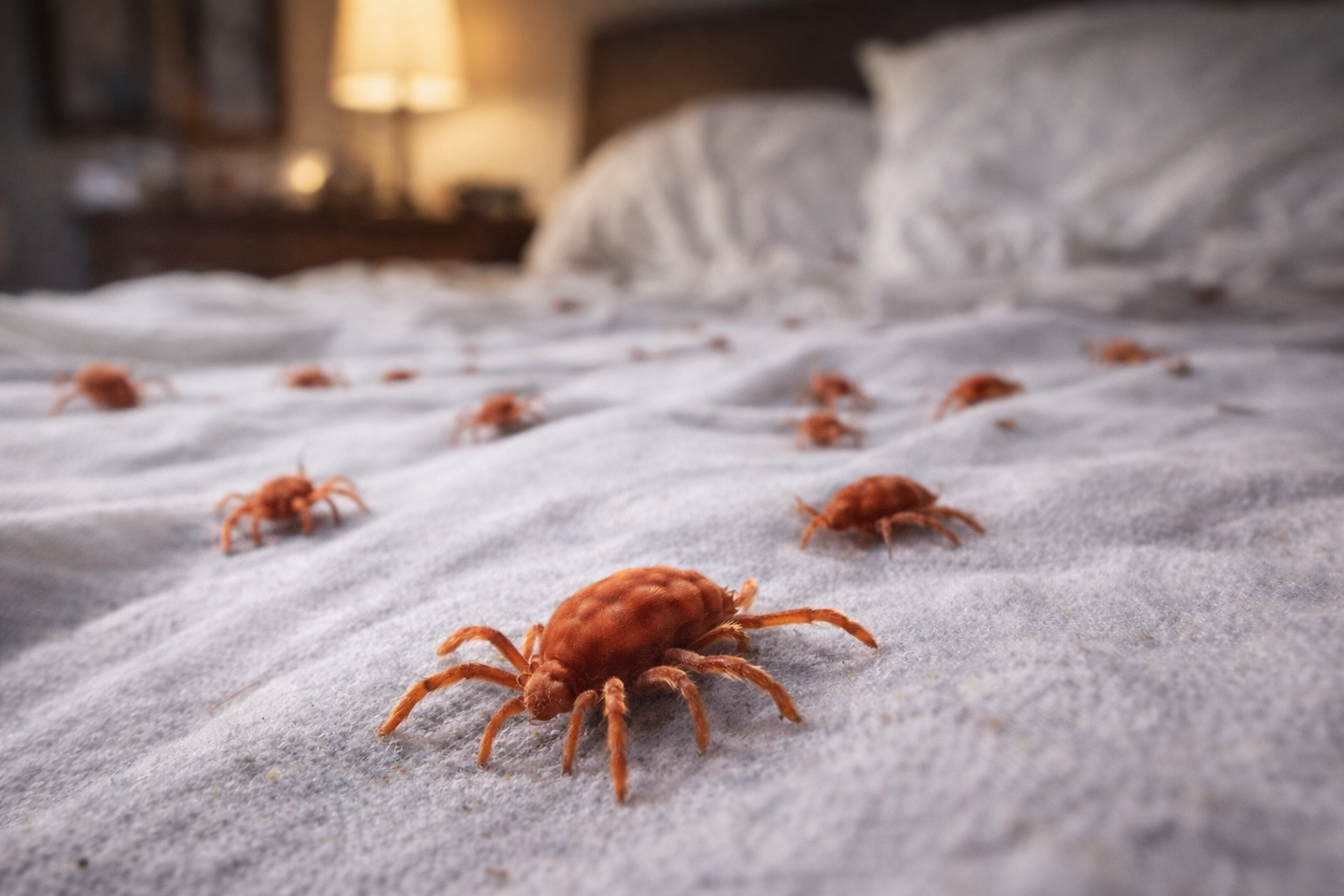
Discovering unexplained bites or persistent itching at home can be both frustrating and alarming. Among the many possible culprits, chiggers are often misunderstood. While these tiny mites are typically associated with grassy fields and wooded areas, many people worry about the possibility of chiggers in bedroom spaces. This concern can lead to confusion, unnecessary stress, and sometimes ineffective treatment methods. Understanding what chiggers are, how they behave, and whether they can truly infest indoor environments is essential for maintaining both comfort and peace of mind.
This article provides a detailed and evidence-based look at the issue, explaining how chiggers operate, whether bedrooms are at risk, how to identify their presence, and what steps to take for prevention and control.
What Are Chiggers?
They are extremely small, often barely visible to the naked eyeand are commonly found in outdoor environments such as tall grass, forests, gardens, and moist soil. Instead, they attach themselves to the surface and inject digestive enzymes that break down skin cells, which they then consume.
Their bites typically cause intense itching, redness, and small, raised welts. Because symptoms often appear hours after exposure, many people mistakenly assume the irritation originated indoors.
Do Chiggers Live Indoors?
Outdoor Creatures by Nature
Chiggers thrive in humid, vegetated environments. They depend on specific environmental conditions to survive, including moisture, warmth, and access to hosts such as small mammals, birds, or reptiles. Bedrooms and other indoor areas generally lack the ecological conditions necessary for chiggers to reproduce and maintain a population.
In most cases, chiggers do not establish long-term infestations inside homes. They are not like bed bugs, fleas, or dust mites that adapt easily to indoor living. Instead, they attach to a host outdoors and eventually fall off after feeding.
How They Might Enter a Bedroom
Although chiggers do not typically live indoors, it is possible to bring them inside unintentionally. After spending time in grassy or wooded areas, a person may carry larvae on clothing, shoes, or even skin. If these mites detach indoors, they may briefly remain in bedding, carpets, or furniture. However, without suitable environmental conditions, they cannot survive for long or reproduce.
This situation often leads to the misconception of a sustained infestation. In reality, the irritation may stem from exposure that occurred earlier outside.
Signs People Attribute to Chiggers in Bedroom
When individuals suspect chiggers in bedroom areas, they usually report certain common signs. Understanding these symptoms can help distinguish between actual chigger exposure and other causes.
Itchy Welts or Rashes
Chigger bites commonly appear around tight-fitting clothing areas such as waistbands, socks, or undergarments. If bites primarily occur in these regions, the exposure likely happened outdoors. Bed bug bites, in contrast, often appear in clusters or straight lines on exposed skin.
Delayed Itching
One characteristic feature of chigger bites is delayed itching. Symptoms can begin several hours after contact, sometimes even the next day. This delay often leads individuals to believe they were bitten during sleep.
Lack of Visible Insects
Unlike bed bugs, chiggers are extremely difficult to see. If no visible insects, blood spots, or shed skins appear on bedding, it is less likely that the bedroom itself is the source.
Differentiating Between Chiggers and Bed Bugs
Confusion between chiggers and bed bugs is common. However, their behaviors and habitats differ significantly.
Bed bugs live and reproduce indoors, hiding in mattresses, headboards, and furniture crevices. They feed at night and can establish persistent infestations. Chiggers, on the other hand, do not remain attached for extended periods and do not colonize indoor structures.
If bites occur repeatedly over several nights without outdoor exposure, bed bugs are a more probable cause. Careful inspection of mattresses and surrounding areas can help clarify the issue.
Can Chiggers Survive in Bedding?
Chiggers require specific humidity levels and access to hosts in outdoor ecosystems. Dry indoor air and the absence of suitable environmental support make survival difficult. While a few larvae might remain temporarily in bedding after being carried inside, they typically die quickly.
Washing bedding in hot water and drying it at high heat effectively eliminates any remaining mites. Vacuuming carpets and upholstered furniture further reduces the likelihood of lingering pests.
Prevention Strategies
After Outdoor Activities
Preventing the concern of chiggers in bedroom settings begins outdoors. When returning from grassy or wooded areas, remove clothing immediately and wash it in hot water. Showering promptly can help remove unattached larvae before they cause irritation.
Wearing long sleeves, long pants, and closed shoes during outdoor activities reduces exposure. Tucking pants into socks and using insect repellent containing DEET or permethrin can provide additional protection.
Maintaining a Clean Indoor Environment
Although chiggers rarely establish indoor infestations, maintaining cleanliness helps eliminate any accidental introductions. Regular vacuuming, laundering bedding weekly, and keeping floors free of clutter are effective preventive measures.
If pets spend time outdoors, inspect and groom them regularly, as they can occasionally carry mites inside.
Treatment for Chigger Bites
If you suspect bites from chiggers, focus on symptom relief rather than extensive pest control measures. Avoid scratching, as it can lead to skin infections. Most chigger bites resolve within one to two weeks without medical intervention.
If severe swelling, signs of infection, or persistent symptoms occur, consult a healthcare professional.
When to Seek Professional Help
In rare cases where repeated bites continue despite no recent outdoor exposure, it may be wise to consult a pest control expert. A professional inspection can rule out bed bugs, fleas, or other indoor pests.
Excessive pesticide use inside the home is not recommended without confirmed infestation. Overuse of chemicals can pose health risks and often fails to address the true cause.
Common Myths About Chiggers
Many myths surround chiggers, contributing to unnecessary anxiety.
One common misconception is that chiggers burrow into the skin. In reality, they remain on the surface and feed externally. Another myth suggests that nail polish or petroleum jelly suffocates embedded mites. Since chiggers do not burrow deeply, these remedies offer little benefit.
A further misunderstanding involves the belief that entire homes must be fumigated after a single suspected exposure. As discussed, sustained indoor infestations are extremely uncommon.
Practical Steps for Peace of Mind
If you are concerned about chiggers in bedroom areas, take practical and measured action. Wash all bedding in hot water, vacuum thoroughly, and monitor for new bites. Reflect on recent outdoor activities that may explain the symptoms.
Keep in mind that stress and anxiety can intensify the perception of itching. A calm, systematic approach is more effective than immediate drastic measures.
Conclusion
The idea of chiggers in bedroom environments can be unsettling, but in most cases, it reflects a misunderstanding of how these mites live and feed. Chiggers are outdoor parasites that depend on specific environmental conditions not typically found inside homes. While it is possible to carry them indoors temporarily on clothing or skin, they do not establish long-term infestations in bedding or furniture.
Accurate identification is crucial to avoiding unnecessary treatments and worry. By understanding their behavior, practicing proper hygiene after outdoor exposure, and maintaining a clean indoor environment, you can significantly reduce the risk of irritation and confusion.
Ultimately, knowledge remains the most effective tool in addressing concerns about household pests. With the right information and preventive strategies, you can protect your living space and enjoy lasting comfort without fear of hidden infestations.
