

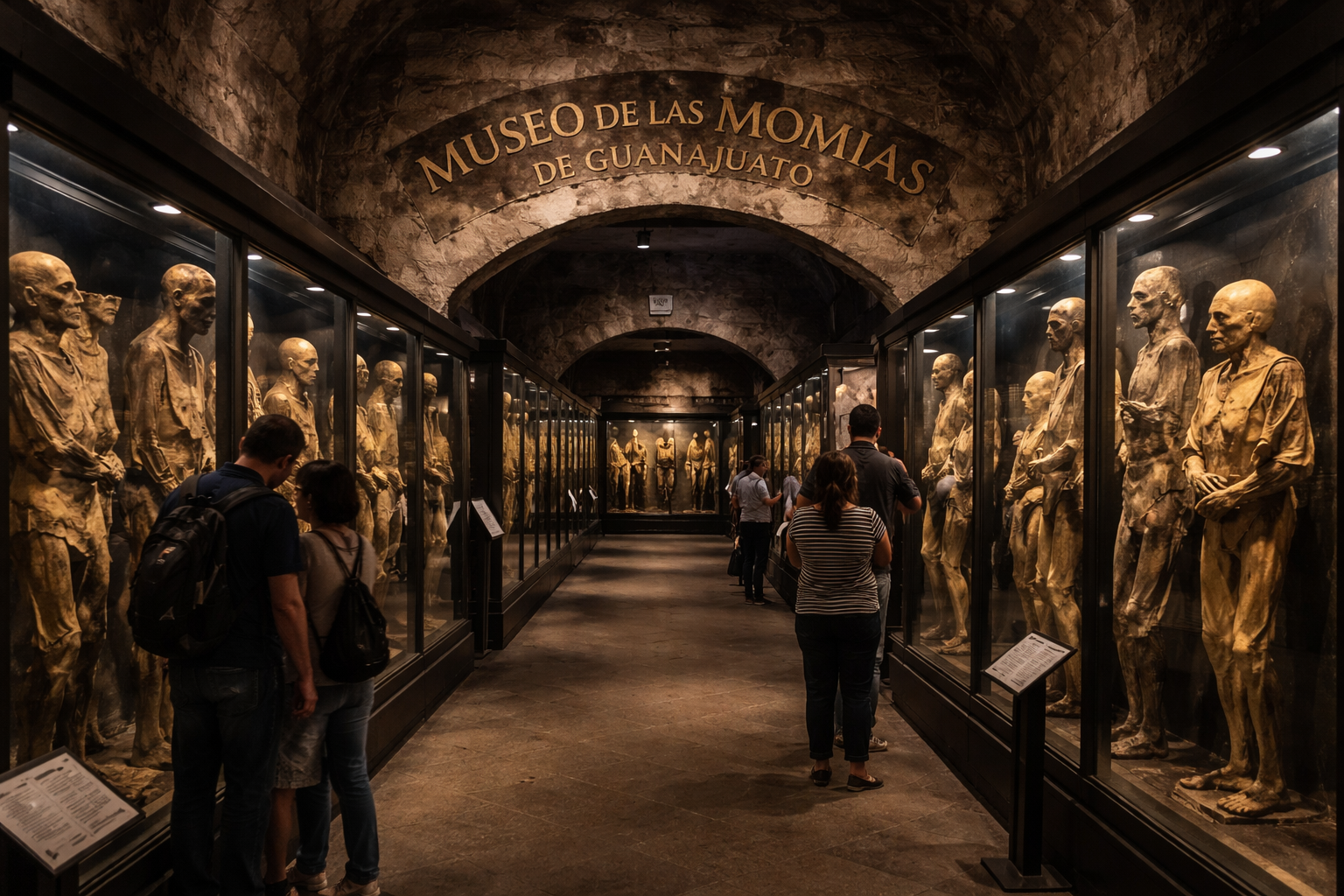
Few places in the world confront visitors with history as directly and powerfully as the museum of the mummies of guanajuato. Located in the heart of central Mexico, this remarkable institution presents a collection of naturally mummified bodies that tell deeply human stories about life, death, and cultural memory. Rather than relying on artificial preservation methods, the mummies displayed here emerged from unique environmental conditions that transformed an ordinary burial ground into one of the most compelling historical sites in Latin America.
Situated in the colonial city of Guanajuato, the museum draws scholars, anthropologists, and curious travelers alike. Its exhibits offer insight into nineteenth- and early twentieth-century burial practices while raising important ethical and scientific questions. To understand the significance of this institution, one must explore its origins, its scientific context, and its evolving role in contemporary cultural discourse.
Historical Background
Origins in a Municipal Cemetery
The story of the museum of the mummies of guanajuato begins in the mid-nineteenth century at the Santa Paula Cemetery. During this period, local authorities implemented a burial tax that required families to maintain payments for their relatives’ graves. When payments lapsed, cemetery workers exhumed the bodies to make space for new burials.
To widespread surprise, many of the exhumed remains had undergone natural mummification. The region’s dry climate, mineral-rich soil, and sealed burial niches created conditions that prevented typical decomposition. Instead of decaying, the bodies desiccated, preserving facial features, clothing fragments, and even expressions.
Public Exhibition and Institutionalization
Initially, cemetery workers stored the mummified remains in a nearby building. Over time, visitors began requesting access to view the unusual discoveries. By the early twentieth century, authorities formalized the display, eventually establishing what is now known as the museum of the mummies of guanajuato. The institution transitioned from an informal curiosity to an organized cultural and scientific site.
As tourism in Guanajuato expanded, the museum gained prominence. Its unique collection distinguished it from other historical attractions in Mexico, including renowned archaeological institutions such as National Museum of Anthropology.
Scientific Perspective
Natural Mummification Process
Unlike the deliberate embalming practices associated with ancient Egypt, the mummies in Guanajuato formed through environmental factors. The cemetery’s crypts facilitated rapid dehydration, halting bacterial activity responsible for decay. This natural preservation process provides valuable data for forensic and medical research.
Researchers analyze tissue samples, clothing remnants, and burial contexts to better understand health conditions and mortality patterns in nineteenth-century Mexico. The mummies offer tangible evidence of diseases, nutritional deficiencies, and social conditions of the era.
Ethical Considerations
Displaying human remains inevitably raises ethical concerns. Museum administrators have implemented interpretive strategies to ensure respectful presentation. Informational panels contextualize each individual’s life and historical background, shifting focus from spectacle to education.
In recent decades, curators have engaged in dialogue about consent, dignity, and cultural sensitivity. This ongoing discussion reflects broader debates within museology and anthropology about how institutions should handle human remains.
Cultural Significance
Reflection of Mexican Attitudes Toward Death
Mexico maintains a distinctive cultural relationship with death, shaped by Indigenous traditions and Catholic influences. Celebrations such as Día de los Muertos emphasize remembrance and continuity rather than fear. The museum of the mummies of guanajuato aligns with this perspective by presenting death as part of the human narrative.
While the museum’s tone differs from festive commemorations, it contributes to the broader cultural dialogue about mortality. Visitors encounter preserved individuals who once lived ordinary lives, fostering reflection rather than morbidity.
Tourism and Economic Impact
Tourism represents a vital component of Guanajuato’s economy. The museum stands among the city’s most visited attractions, alongside architectural landmarks and cultural festivals. Its popularity supports local businesses, guides, and preservation initiatives.
As a designated UNESCO World Heritage city, Guanajuato attracts international attention for its colonial architecture and rich mining history. The museum enhances this appeal by offering a distinctive educational experience.
Visitor Experience
Exhibition Layout
The museum organizes its exhibits chronologically and thematically. Glass cases display individual mummies with accompanying biographical information when available. Lighting remains subdued to preserve delicate materials while creating a contemplative atmosphere.
Some sections highlight specific themes, including infant mummies and burial attire. These displays encourage visitors to consider social customs surrounding death and family remembrance during the nineteenth century.
Emotional Impact
The experience of viewing preserved human remains can evoke a range of emotions, from curiosity to solemn reflection. The museum of the mummies of guanajuato does not sensationalize its collection; instead, it emphasizes historical education and cultural context.
Visitors often describe the encounter as thought-provoking rather than unsettling. By presenting the mummies within a structured narrative, the institution transforms potential shock into meaningful engagement with history.
Preservation and Conservation
Environmental Controls
Maintaining naturally mummified remains requires careful environmental management. Temperature and humidity must remain stable to prevent deterioration. Conservation specialists monitor display conditions and perform periodic assessments to ensure long-term preservation.
Advancements in preservation science have improved the museum’s ability to safeguard these fragile remains. Protective cases minimize exposure to contaminants while allowing clear visibility for educational purposes.
Documentation and Research
Scholars collaborate with the museum to document each mummy’s condition and historical context. Archival research, forensic analysis, and digital imaging techniques contribute to a growing body of academic knowledge.
Through partnerships with universities and research institutions, the museum continues to expand its scientific contributions. This research underscores the importance of treating the collection as a source of historical insight rather than mere curiosity.
The Museum in Contemporary Culture
Media Representation
The museum has influenced literature, documentaries, and popular media. Its distinctive subject matter captures public imagination and sparks conversations about history and mortality. While fictional portrayals sometimes exaggerate aspects of the collection, the institution itself maintains a factual and educational approach.
By controlling its narrative, the museum counters misconceptions and reinforces its scholarly mission.
Educational Outreach
Educational programs form an integral part of the museum’s mission. Guided tours provide historical context tailored to students, researchers, and general visitors. Workshops and lectures explore themes such as forensic science, cultural anthropology, and regional history.
Through outreach initiatives, the museum ensures that its collection serves as a tool for learning rather than spectacle. This commitment strengthens its reputation within both academic and tourism sectors.
Broader Historical Context
Public Health and Burial Practices
The mummies reveal insights into public health challenges of nineteenth-century Mexico. Epidemics, mining accidents, and limited medical resources shaped mortality patterns. By examining preserved remains, historians gain perspective on the social and economic conditions of the time.
Burial customs also emerge as a significant theme. Clothing, coffin materials, and grave construction reflect socioeconomic status and cultural identity. These details provide a richer understanding of daily life in historic Guanajuato.
Connection to National Identity
Although distinct from pre-Columbian archaeological sites, the museum contributes to Mexico’s diverse historical narrative. It highlights a chapter of urban life shaped by colonial influence, industrial expansion, and evolving social norms.
In doing so, the museum of the mummies of guanajuato complements other national institutions that preserve Mexico’s multifaceted heritage.
Conclusion
The museum of the mummies of guanajuato stands as a compelling intersection of science, history, and cultural reflection. Born from unexpected natural processes, its collection offers unparalleled insight into nineteenth-century life in central Mexico. Through careful preservation and thoughtful interpretation, the institution transforms preserved remains into powerful educational resources.
Rather than focusing solely on the extraordinary nature of mummification, the museum emphasizes the humanity of those on display. Each preserved individual represents a personal story embedded within broader historical currents. By approaching its collection with respect and scholarly rigor, the museum invites visitors to engage with themes of mortality, memory, and cultural identity.
As Guanajuato continues to welcome travelers from around the world, this unique institution remains central to its cultural landscape. It challenges perceptions, fosters understanding, and underscores the enduring value of historical inquiry. In preserving the past with dignity and care, the museum ensures that these silent witnesses continue to inform and inspire future generations.
