

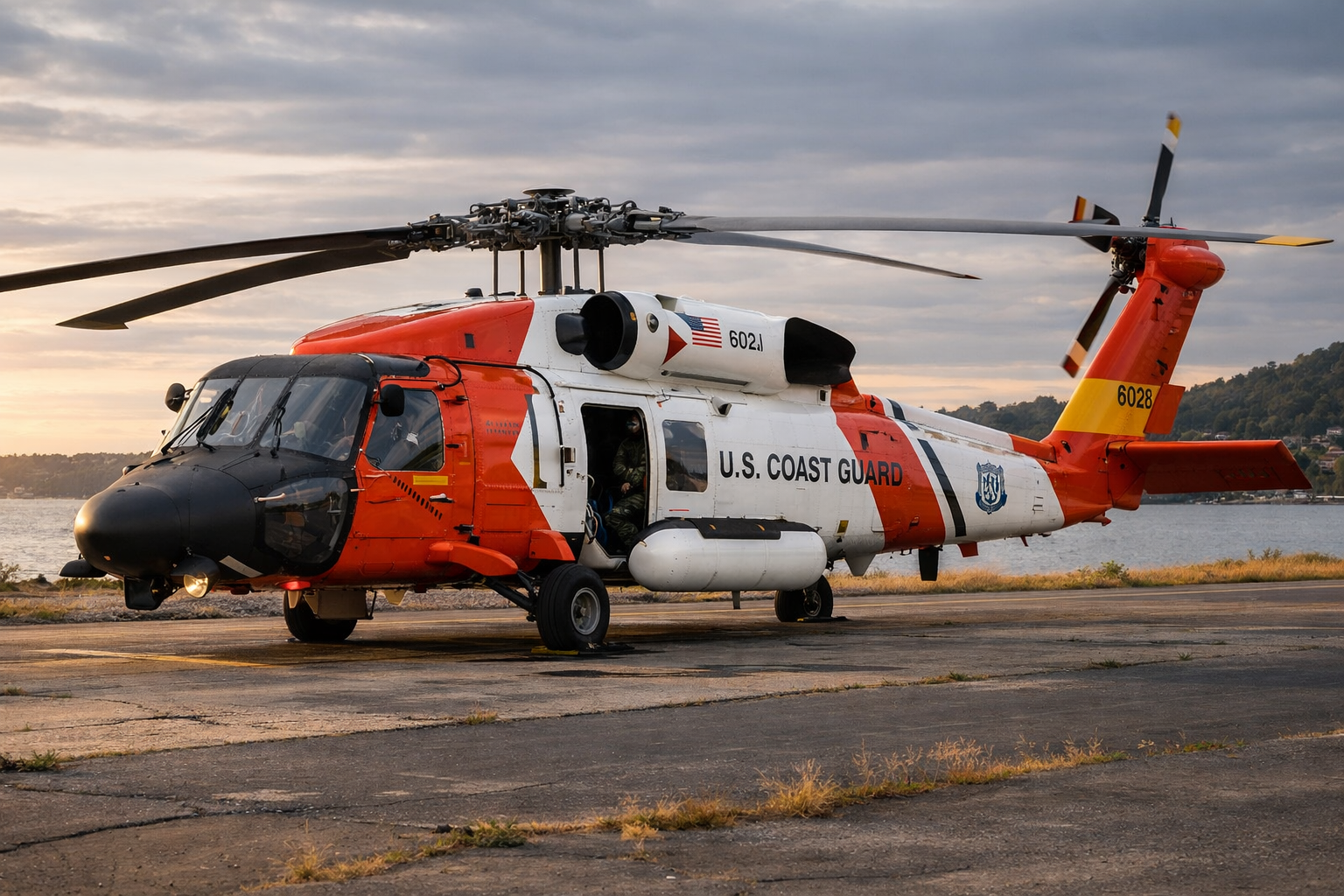
Maritime rescue operations demand aircraft that combine endurance, reliability, and advanced avionics within a highly adaptable airframe. Among the most respected platforms designed for such missions is the sikorsky hh-60j jayhawk. Developed to serve the rigorous needs of the United States Coast Guard, this helicopter represents a refined adaptation of military rotorcraft technology for search and rescue, law enforcement, and maritime patrol duties. Its robust engineering and mission flexibility have allowed it to operate in some of the world’s most challenging environments, from storm-lashed coastlines to open ocean expanses.
Derived from the renowned Sikorsky UH-60 Black Hawk platform and manufactured by Sikorsky Aircraft, the HH-60J embodies decades of rotary-wing innovation. This article examines the aircraft’s development, technical specifications, operational roles, modernization efforts, and lasting impact on maritime aviation.
Development and Historical Background
Origins in the Black Hawk Family
The sikorsky hh-60j jayhawk traces its lineage to the versatile UH-60 Black Hawk, originally designed for the United States Army. Engineers adapted the Black Hawk’s durable airframe to meet the specialized needs of the United States Coast Guard. The Coast Guard required an aircraft capable of long-range overwater missions, high endurance, and enhanced navigation systems for adverse weather conditions.
Introduced in the early 1990s, the HH-60J replaced the aging HH-3F Pelican fleet. Its arrival marked a significant modernization milestone, enabling crews to perform complex rescue and enforcement missions with greater speed and safety.
Tailoring for Maritime Operations
Unlike its military counterpart, the Jayhawk incorporated mission-specific modifications. Engineers integrated advanced radar systems, weather detection technology, and reinforced corrosion protection to withstand saltwater exposure. Additional fuel capacity extended operational range, a critical factor in offshore rescues.
These enhancements ensured that the helicopter could conduct extended missions without sacrificing performance or reliability.
Technical Specifications
Airframe and Performance
The sikorsky hh-60j jayhawk features a twin-engine configuration that provides redundancy and enhanced safety during overwater flights. Powered by General Electric T700 engines, the aircraft delivers substantial lift capacity while maintaining fuel efficiency.
With a cruising speed exceeding 160 knots and an operational range of approximately 600 nautical miles, the Jayhawk demonstrates impressive endurance. Its four-blade main rotor system offers stability in turbulent conditions, enabling precise maneuvering during hoist operations.
Avionics and Navigation Systems
Advanced avionics distinguish the Jayhawk from earlier rescue helicopters. The cockpit incorporates digital displays, integrated flight management systems, and weather radar optimized for maritime environments. These systems assist pilots in navigating low-visibility conditions, including heavy rain, fog, and nighttime operations.
The aircraft’s rescue hoist system supports complex extraction procedures, allowing crews to retrieve individuals from vessels, cliffs, or open water. This capability underscores the helicopter’s adaptability in diverse rescue scenarios.
Operational Roles and Missions
Search and Rescue
The primary mission of the sikorsky hh-60j jayhawk centers on search and rescue operations. Coast Guard crews deploy the aircraft to respond to distress calls from commercial vessels, recreational boaters, and offshore workers. Its extended range enables rapid response far beyond coastal boundaries.
Rescue swimmers deploy from the helicopter to assist survivors, while medical personnel provide immediate care onboard. The cabin’s configurable layout accommodates stretchers and life-saving equipment, transforming the aircraft into an airborne emergency response unit.
Law Enforcement and Maritime Security
Beyond rescue duties, the Jayhawk supports maritime law enforcement missions. Crews conduct surveillance patrols to combat drug trafficking, illegal fishing, and human smuggling. Equipped with forward-looking infrared sensors and communication systems, the helicopter enhances situational awareness during interdiction operations.
This dual-role capability strengthens national security and reinforces maritime governance.
Environmental Response
The Coast Guard also relies on the HH-60J for environmental protection missions. During oil spills or hazardous material incidents, the helicopter provides aerial assessment and coordination support. Its ability to hover precisely over affected areas facilitates rapid evaluation and response planning.
Modernization and Transition
Upgrades and Service Enhancements
As technology evolved, the Coast Guard implemented upgrades to improve performance and extend service life. These enhancements included avionics modernization and structural refinements designed to maintain operational readiness.
Such updates ensured that the sikorsky hh-60j jayhawk remained effective in a rapidly changing technological landscape.
Transition to the MH-60T
In the 2010s, the Coast Guard initiated a transition to the Sikorsky MH-60T Jayhawk, an advanced variant incorporating enhanced sensors, updated cockpit displays, and expanded mission capabilities. While the MH-60T represents the next evolutionary step, it builds directly upon the foundational design of the HH-60J.
The transition reflects a commitment to continuous improvement rather than replacement of a flawed platform. The original Jayhawk established a benchmark for reliability and adaptability that continues to influence its successor.
Engineering Strengths
Durability in Harsh Environments
Maritime aviation subjects aircraft to corrosive salt air and unpredictable weather. The sikorsky hh-60j jayhawk incorporates specialized coatings and materials to resist corrosion, extending structural lifespan. Its rugged landing gear and reinforced fuselage enhance survivability during challenging operations.
These design features demonstrate how engineers tailored the helicopter specifically for coastal and offshore missions.
Crew-Centered Design
The aircraft’s cabin layout prioritizes crew efficiency and safety. Clear communication systems facilitate coordination among pilots, rescue swimmers, and medical personnel. Ergonomic design reduces fatigue during prolonged missions.
By focusing on operational practicality, designers ensured that the Jayhawk supports both mechanical performance and human capability.
Global Influence and Legacy
Contribution to Maritime Aviation Standards
The sikorsky hh-60j jayhawk set a new standard for medium-range maritime helicopters. Its integration of advanced avionics, extended range, and multi-mission capability influenced subsequent rotorcraft development.
Other maritime agencies worldwide have studied its operational model when designing their own rescue fleets. The aircraft’s success underscores the value of adapting proven military platforms for civilian and security roles.
Symbol of Coast Guard Readiness
For decades, the Jayhawk has symbolized readiness and rapid response. Its presence at Coast Guard air stations across the United States reinforces public confidence in maritime safety infrastructure. Countless lives have been saved through its deployment, cementing its reputation as a dependable rescue asset.
The Human Element
Stories of Rescue
Behind every aircraft lies a history of missions and human stories. The sikorsky hh-60j jayhawk has participated in hurricane evacuations, open-sea rescues, and coordinated disaster responses. Crews often operate in extreme weather, demonstrating courage and professionalism.
These missions highlight the aircraft’s role not merely as machinery but as a lifeline connecting those in peril with safety.
Training and Expertise
Operating the Jayhawk requires extensive training. Pilots undergo rigorous instruction in instrument flight rules, hoist procedures, and maritime navigation. Rescue swimmers and maintenance crews contribute specialized skills that ensure mission success.
The synergy between advanced engineering and human expertise defines the helicopter’s operational effectiveness.
Conclusion
The sikorsky hh-60j jayhawk stands as a testament to thoughtful engineering and mission-driven design. Developed from the proven Sikorsky UH-60 Black Hawk platform and refined by Sikorsky Aircraft for the United States Coast Guard, the Jayhawk transformed maritime rescue and enforcement capabilities. Its twin-engine reliability, advanced avionics, and extended range enabled crews to operate confidently in demanding environments.
Through search and rescue missions, law enforcement patrols, and environmental response operations, the helicopter has demonstrated exceptional versatility. Even as newer variants enter service, the legacy of the HH-60J endures in the continued evolution of Coast Guard aviation.
In a world where maritime safety remains critical to commerce, travel, and national security, the Jayhawk’s contributions remain profound. Its enduring impact reflects the powerful combination of innovation, dedication, and a steadfast commitment to saving lives at sea.
