

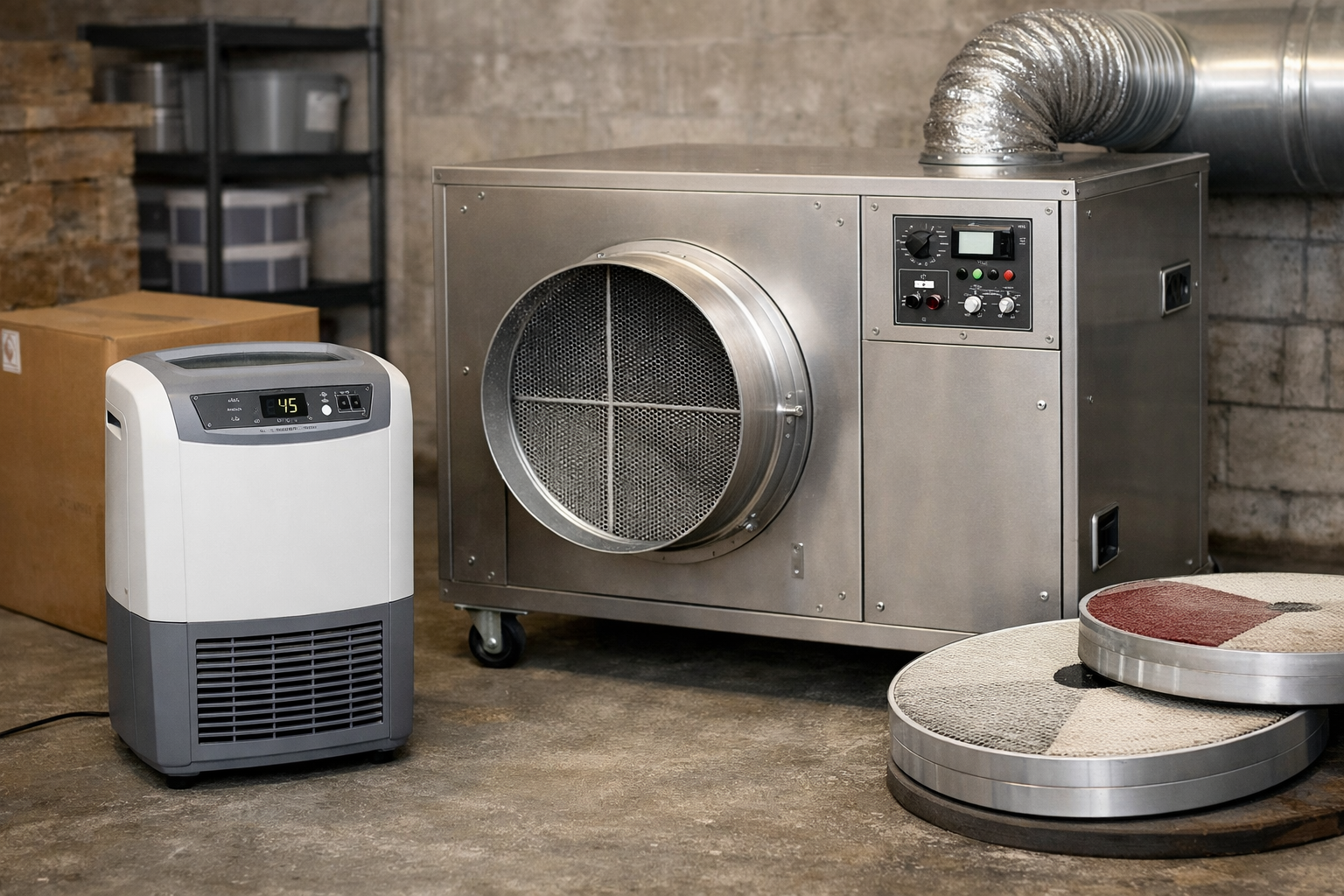
Maintaining the right level of humidity inside a building is essential for comfort, health, and the protection of property. Excess moisture in the air can lead to mold growth, unpleasant odors, and damage to furniture, electronics, and structural materials. For this reason, many homes, offices, and industrial facilities rely on dehumidification systems to control indoor humidity levels. Among the different technologies available today, desiccant/waterless dehumidifiers have gained attention for their unique method of removing moisture from the air.
Unlike traditional dehumidifiers that rely on refrigeration and water collection tanks, desiccant/waterless dehumidifiers use special moisture-absorbing materials to capture humidity directly from the air. This technology makes them particularly effective in cooler environments and specialized applications where standard dehumidifiers may struggle. As awareness of indoor air quality continues to grow, many people are exploring how this technology works and why it can be beneficial in both residential and commercial spaces.
This article explains the concept, working principles, advantages, and common applications of desiccant/waterless dehumidifiers, helping readers understand why they are becoming an increasingly popular choice for humidity control.
Understanding Humidity and Its Impact
While some moisture is necessary for comfort and health, excessive humidity can cause several problems inside buildings.
High humidity often encourages mold and mildew growth, which may trigger allergies and respiratory issues. Moisture can also damage wooden furniture, books, electronics, and building materials. In industrial environments, excess humidity can affect manufacturing processes and product quality.
Traditional dehumidifiers typically use cooling systems that condense moisture into water droplets, which then collect in a reservoir. While effective in many situations, these systems may not perform well in colder temperatures or environments that require very low humidity levels.
This limitation has encouraged the development of alternative technologies, including desiccant/waterless dehumidifiers, which use a completely different approach to moisture removal.
What Are Desiccant/Waterless Dehumidifiers?
Desiccant/waterless dehumidifiers are humidity control devices that use special moisture-absorbing materials called desiccants. A desiccant is a substance that naturally attracts and holds water molecules from the surrounding air.
Common desiccant materials include silica gel and other specialized compounds that can absorb significant amounts of moisture. When air passes through the device, the desiccant material captures humidity, leaving the outgoing air much drier.
Unlike compressor-based dehumidifiers, these systems do not rely on cooling coils to condense water. Instead, they remove moisture through a chemical or physical absorption process. Because of this difference, desiccant/waterless dehumidifiers often perform better in cooler environments where traditional units lose efficiency.
How the Technology Works
Air Intake and Moisture Absorption
The process begins when a fan draws humid air into the unit. The air then passes through a rotating wheel or filter coated with desiccant material. As the air flows through this surface, the desiccant attracts and captures water vapor molecules.
This step removes moisture from the air without producing liquid water that must be drained or collected.
After absorbing moisture, the desiccant material must eventually release the captured water vapor so it can continue functioning effectively. Many systems achieve this through a regeneration cycle.
During regeneration, a portion of the unit warms the desiccant material, allowing it to release the trapped moisture. The device then expels this vapor outside the system. This cycle ensures that the material remains capable of absorbing humidity again.
Because of this continuous cycle, desiccant/waterless dehumidifiers can operate efficiently for long periods without needing a water collection tank.
Advantages of Desiccant/Waterless Dehumidifiers
Effective Performance in Low Temperatures
One of the biggest advantages of desiccant/waterless dehumidifiers is their ability to perform well in cooler environments. Traditional compressor-based units often struggle when temperatures drop because condensation becomes less efficient.
Desiccant systems, however, rely on absorption rather than condensation. This means they continue working effectively even in colder spaces such as basements, storage areas, and warehouses.
Quiet Operation
Many desiccant units operate more quietly than compressor models. Without heavy refrigeration components, they typically produce less mechanical noise. This feature makes them suitable for bedrooms, offices, and libraries where a quiet environment is important.
Lightweight and Portable Design
Another benefit is the relatively lightweight design of many desiccant/waterless dehumidifiers. Without a large compressor or water tank, manufacturers can create compact and portable devices that are easy to move between rooms.
This portability allows homeowners and facility managers to adjust humidity control according to changing needs.
Continuous Operation
Since these devices do not rely on collecting liquid water in a tank, they can often operate continuously without needing frequent emptying.
This feature can be particularly helpful in locations where maintenance access is limited.
Common Applications
Many homeowners use desiccant/waterless dehumidifiers to control humidity in areas where traditional systems may not work well. Basements, garages, and laundry rooms often experience higher humidity levels, especially during colder seasons.
Using a desiccant system in these spaces can help prevent mold growth and protect stored items.
Museums and Archives
Institutions that store sensitive materials require extremely precise humidity control. Museums and archives often protect artwork, historical documents, and artifacts from moisture damage.
Organizations such as Smithsonian Institution emphasize strict environmental control to preserve valuable collections. In such environments, desiccant-based humidity systems can help maintain stable conditions.
Industrial and Manufacturing Facilities
In manufacturing environments, humidity can affect the quality of products and materials. Electronics manufacturing, pharmaceutical production, and food processing often require controlled air conditions.
Industries may use advanced moisture control systems designed around desiccant technology to ensure consistent production quality.
Storage and Warehousing
Large warehouses and storage facilities often face humidity problems that could damage stored goods. Paper products, textiles, and electronic equipment are especially vulnerable to moisture exposure.
Installing desiccant/waterless dehumidifiers in these environments can help protect inventory and maintain product quality.
Comparison With Traditional Dehumidifiers
Traditional refrigerant dehumidifiers remain popular because they are efficient in warm environments and widely available. However, they rely on condensation technology that works best in moderate to high temperatures.
In contrast, desiccant systems offer advantages in cooler environments and specialized humidity control situations. Their waterless design and ability to maintain low humidity levels make them ideal for certain applications.
The choice between the two technologies depends on factors such as room temperature, humidity levels, energy efficiency requirements, and the intended use of the space.
Maintenance and Care
Although desiccant/waterless dehumidifiers require less maintenance than some traditional units, they still need occasional care to ensure optimal performance.
Regular cleaning of air filters helps maintain proper airflow and efficiency. Users should also follow manufacturer guidelines for operating conditions and ventilation.
High-quality devices from reputable brands may include sensors and automatic control systems that regulate humidity levels automatically. Companies such as Honeywell and Panasonic develop climate control products designed for both home and commercial use.
Future Trends in Dehumidification Technology
As indoor air quality becomes a growing concern worldwide, dehumidification technologies continue to evolve. Researchers and manufacturers are working to create more energy-efficient systems that reduce power consumption while improving performance.
Smart home technology is also influencing climate control systems. Modern devices can integrate with mobile apps and automated sensors, allowing users to monitor humidity levels remotely.
These innovations suggest that desiccant/waterless dehumidifiers will continue to develop and become more accessible for both residential and commercial use.
Conclusion
Controlling indoor humidity is essential for maintaining comfortable living spaces, protecting valuable items, and supporting healthy environments. While traditional dehumidifiers remain common, alternative technologies have expanded the options available to homeowners and businesses.
Desiccant/waterless dehumidifiers offer a unique approach to moisture removal by using absorbent materials rather than refrigeration systems. Their ability to operate effectively in cooler conditions, combined with quiet performance and low maintenance needs, makes them suitable for many specialized applications.
From homes and storage areas to museums and industrial facilities, these systems provide reliable humidity control where traditional methods may struggle. As technology continues to advance, desiccant-based solutions are likely to play an increasingly important role in managing indoor air quality.
By understanding how desiccant/waterless dehumidifiers work and where they are most effective, individuals and organizations can make informed decisions about improving their indoor environments and protecting their valuable spaces.
