It’s 2 AM. You’re staring at the ceiling, your mind racing through tomorrow’s to-do list. The more you “try” to sleep, the more awake you feel. What if you could flip a switch and convince your body to fall asleep in under a minute? There’s a surprisingly simple trick, backed by science, that can do just that.
Think of your body’s stress response like a car alarm that’s stuck on. Whether you’re startled by a loud noise or just worrying about a deadline, your body reacts the same way: your heart pounds, your breath gets shallow, and your muscles tense up. This physical state of high alert is ‘Go Mode’—a survival instinct that’s terrible for falling asleep.
Ever notice how your shoulders creep up toward your ears when you’re stressed? That’s your body stuck in ‘Go Mode.’ The real challenge in figuring out how to relax your mind for sleep isn’t just quieting your thoughts—it’s convincing your body that it’s safe to power down. Your brain won’t enter ‘Rest Mode’ until it gets a clear ‘all clear’ signal from your body first.
Fortunately, you have a manual override for that alarm. The benefits of controlled breathing for sleep come from its power to send that ‘all clear’ signal directly. By consciously relaxing your muscles and deepening your breath, you can tell your brain to flip the switch from ‘Go Mode’ to ‘Rest Mode,’ creating the perfect conditions for sleep to arrive naturally.
The Military Method: How to Fall Asleep in 2 Minutes, Step-by-Step
If you’ve successfully shifted from ‘Go Mode’ to ‘Rest Mode’ but your body hasn’t gotten the message, this technique is your next step. Popularized in a book by Lloyd Bud Winter, this method was reportedly used by the U.S. military to help pilots fall asleep in under two minutes, even in stressful, noisy environments. It works by systematically powering down your body, which sends a powerful “all clear” signal to your brain.
The entire process is a top-to-bottom body scan. Get comfortable in your bed and follow this sequence.
- Relax Your Face: This is the key. Unclench your jaw. Let your tongue go limp. Soften the tiny muscles around your eyes and let your forehead smooth out.
- Drop Your Shoulders and Hands: Let your shoulders fall as low as you can, releasing all tension. Let your arms go heavy at your sides, relaxing your biceps, forearms, and fingers.
- Exhale Your Chest: Take a deep breath in, and as you exhale, feel your chest soften and deflate.
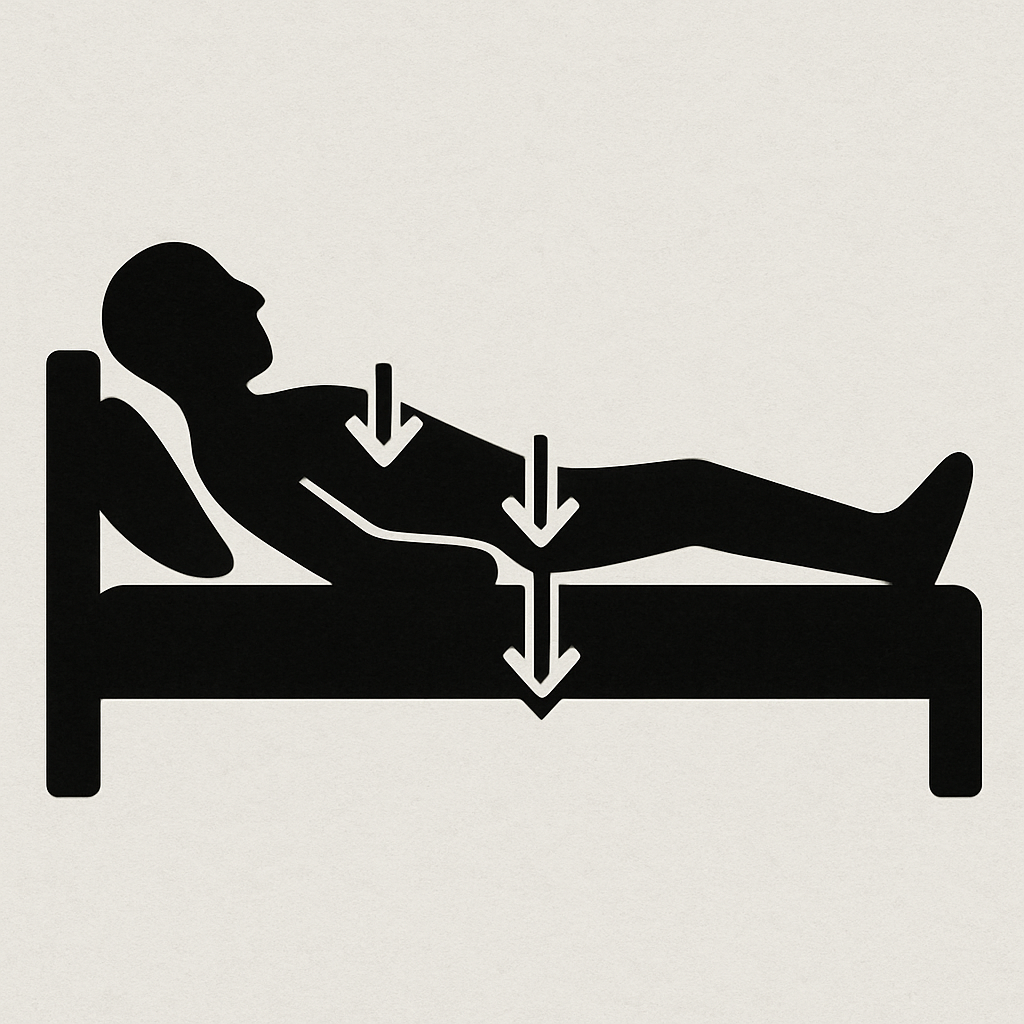
- Let Your Legs Go Heavy: Feel the relaxation move down. Start with your right thigh, then calf, ankle, and foot. Repeat on your left side. Imagine both legs are dead weights sinking into the mattress.
Once your body is still, the final challenge is to quiet your mind. For 10 seconds, try to stop any analytical thoughts about your day. If your mind wanders, use this specific mental trick: picture yourself lying in a canoe on a perfectly calm lake, with nothing but a clear blue sky above you. Hold that image for 10 seconds.
This fall asleep in 2 minutes technique isn’t magic; it’s a skill that breaks the physical feedback loop of stress. Your first few attempts might feel a bit clumsy, but with practice, your body learns to respond almost instantly. To make this method even more powerful, you can combine it with a breathing pattern designed for instant calm.
The 4-7-8 Breathing Trick: Your Path to Instant Calm
If relaxing your muscles turns down the volume on stress, this breathing technique is like hitting the mute button. Developed by Dr. Andrew Weil, the 4-7-8 breathing technique for sleep is a powerful tool because it directly influences your nervous system. By controlling your breath in a specific ratio, you can flip the switch from the anxious ‘Go Mode’ to the tranquil ‘Rest Mode’ in under a minute.
This method is incredibly simple to learn. Find a comfortable position, either sitting up or lying down, and place the tip of your tongue against the ridge of tissue just behind your upper front teeth. You’ll keep it there for the entire exercise.
- Breathe in quietly through your nose for a mental count of 4.
- Hold your breath for a count of 7.
- Breathe out completely through your mouth, making a gentle ‘whoosh’ sound, for a count of 8.
That’s one full breath. Repeat the cycle three more times, for a total of four breaths. The magic is in the long exhale. This extended “out” breath is one of the fastest ways to tell your body that there is no danger, which naturally slows your heart rate and calms a racing mind.
While it’s one of the best breathing exercises to fall asleep instantly, its power isn’t limited to bedtime. Think of it as a portable reset button for anxiety. The next time you feel overwhelmed in traffic or before a meeting, perform a cycle or two. You’re not just calming down; you’re training your body to relax on command.
For Stubborn Tension: How to Command Your Muscles to Relax
Sometimes, even with calm breathing, your body refuses to get the message. You can feel the tension lingering in your shoulders or your jaw, a physical anchor keeping you awake. For this kind of stubborn stress, you need a more direct approach—a way to physically command your muscles to let go. This is where a technique called Progressive Muscle Relaxation comes in.
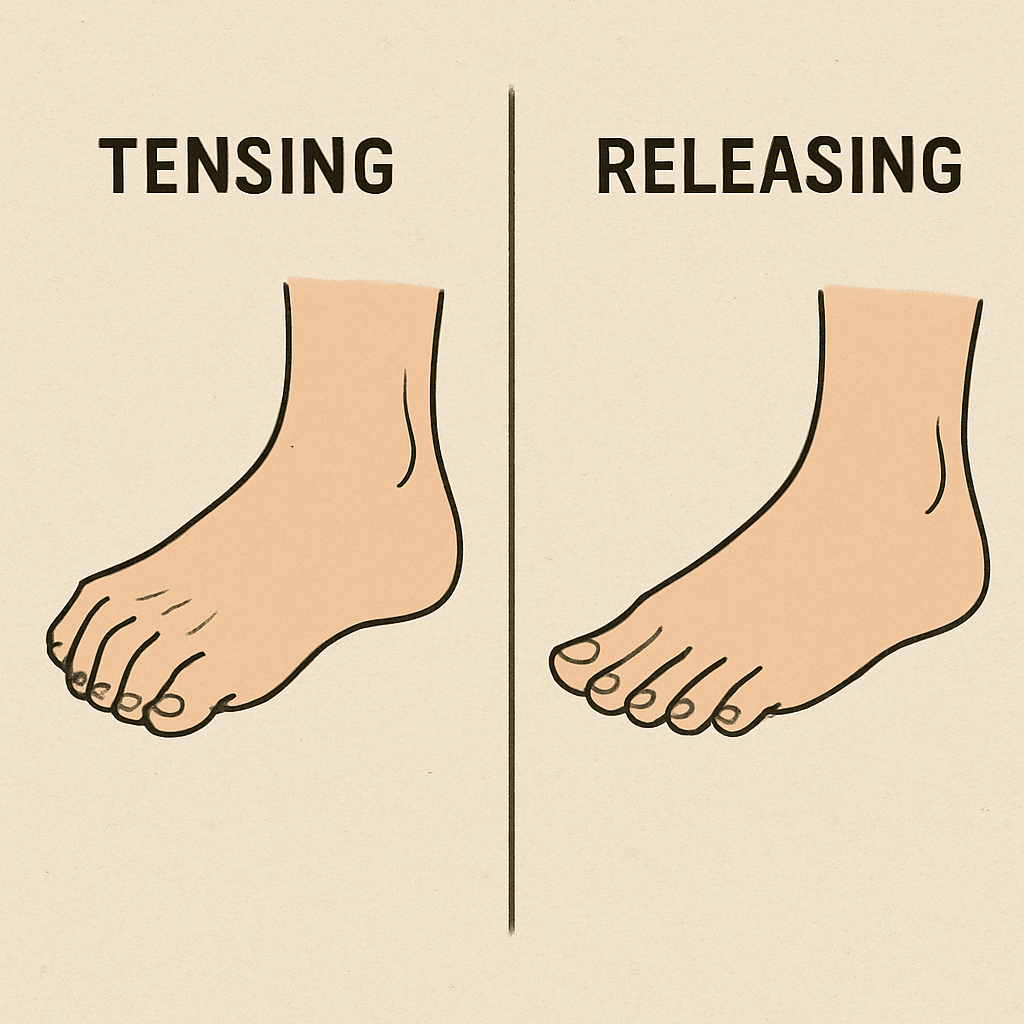
The idea sounds backward at first: to truly relax a muscle, you first have to tense it up. But think about clenching your fist as tightly as you can for five seconds. When you finally release it, the feeling of relief is unmistakable and far more noticeable than if you had just tried to “relax” your open hand. By briefly exaggerating the tension, you force your muscles into a deeper state of release afterward, teaching your body the difference between tense and tranquil.
To begin, get comfortable and take a slow breath. Start with your face. Scrunch up your forehead, eyes, and jaw for five seconds, then release everything at once, feeling the tension melt away. Next, move to your shoulders, pulling them up toward your ears. Hold, then let them drop heavily. Continue this “clench and release” pattern down your body: arms and hands, chest and stomach, and finally your legs, feet, and toes.
With each release, focus on the wave of warmth and heaviness that replaces the tension. You are not forcing sleep; you are simply creating an environment of deep physical calm where sleep can naturally take over. This is how you train your body to sleep faster over time. But like any new skill, it can feel a little awkward at first.
It Didn’t Work the First Time? Here’s the Secret to Making It Stick
If you tried one of these quick sleep induction techniques and found yourself still staring at the ceiling, don’t be discouraged. This is completely normal. These methods aren’t magic spells; they are physical skills, much like learning an instrument or going to the gym for the first time. Your mind and body need time to learn the new pattern and recognize it as a signal for rest. Each attempt, whether it “works” or not, is a step in the right direction.
The original Military Method, for example, was taught with the expectation that it would take six weeks of nightly practice to work reliably for 96% of pilots. The goal is to train your body to sleep faster by making relaxation an automatic response, not an effort. Just like a muscle, this mind-body connection gets stronger with consistent repetition. So, the key is not one perfect night, but many nights of patient practice.
Crucially, the biggest mistake you can make is “trying” too hard to fall asleep. This creates performance anxiety, which releases stress hormones and achieves the exact opposite of your goal. Instead of chasing sleep, shift your focus entirely to the process itself. Concentrate only on your breathing or the sensation of your muscles releasing tension. Your job isn’t to force unconsciousness—it’s to create such a calm and quiet internal environment that sleep naturally arrives on its own.
Your New Toolkit for a Restful Night
Where you once stared at the ceiling feeling helpless, you now hold a remote control for your body’s relaxation response. You’ve moved beyond simply hoping for sleep and into a place of control, armed with a practical toolkit for your mind and body.
Each of these quick sleep induction techniques is a specific tool for a specific problem. Use the Military Method for a full-body shutdown when everything feels “on.” Turn to the 4-7-8 breath for a quick anxiety reset, and use Progressive Muscle Relaxation to melt away stubborn physical tension.
Tonight, don’t try to force sleep. Instead, run an experiment. Pick one method and simply notice the shift from tense to heavy, from racing to quiet. You are no longer chasing sleep; you are creating the perfect conditions for it to find you.