

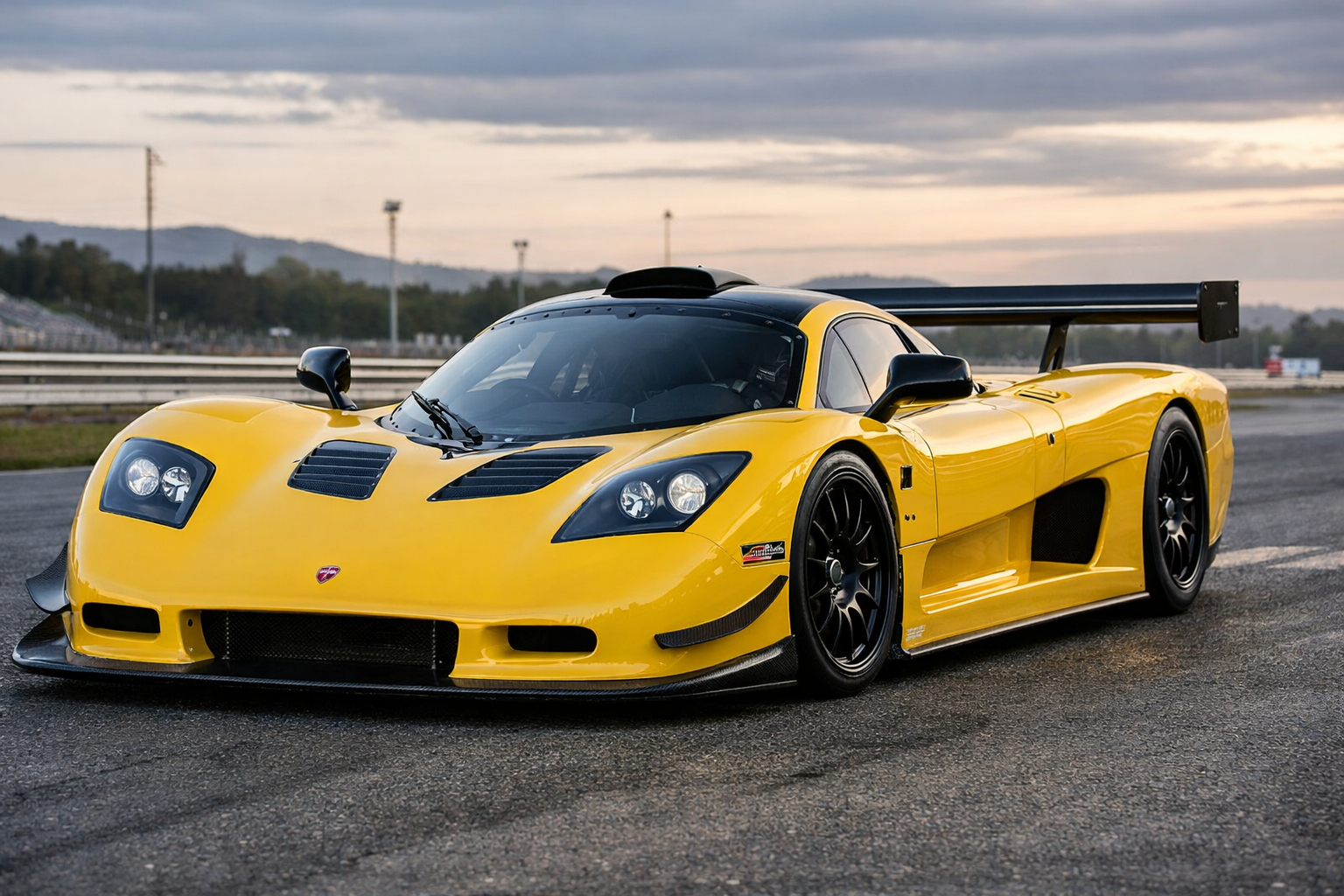
The world of high-performance automobiles is defined by innovation, precision engineering, and relentless pursuit of speed. Among the rare and distinctive machines that have left a lasting mark on the supercar landscape, the Mosler MT900R stands out as a bold expression of lightweight design and track-focused capability. Built by the American manufacturer Mosler Automotive, this remarkable vehicle embodies a philosophy that prioritizes agility, structural integrity, and racing pedigree over unnecessary extravagance.
While many supercars rely on massive power outputs and aggressive styling to capture attention, this model carved its reputation through intelligent engineering and motorsport success. From its advanced composite construction to its formidable performance statistics, the Mosler MT900R remains a fascinating subject for enthusiasts who appreciate precision over hype.
The Origins of Mosler Automotive
To understand the significance of the Mosler MT900R, one must examine the vision behind its creation. Mosler Automotive was founded by financial entrepreneur Warren Mosler, whose passion for racing and mechanical excellence inspired the company’s unique approach to vehicle development. Unlike mass-market manufacturers, Mosler Automotive operated on a small production scale, focusing on creating highly specialized performance machines rather than mainstream luxury vehicles.
The company’s earlier models laid the groundwork for what would become its most celebrated track-oriented creation. By blending racing technology with road-legal compliance, Mosler Automotive positioned itself in a niche market where exclusivity met uncompromising performance.
Engineering Philosophy Behind the Mosler MT900R
Lightweight Construction as a Core Principle
One of the defining characteristics of the Mosler MT900R is its extremely low curb weight. Engineers relied heavily on carbon fiber and composite materials to construct the chassis and body panels. This strategic use of lightweight components significantly enhanced power-to-weight ratio, which in turn improved acceleration, braking, and cornering capabilities.
Unlike heavier competitors that depended solely on horsepower, the Mosler MT900R leveraged its reduced mass to deliver extraordinary responsiveness. Drivers often describe its handling as razor-sharp, with minimal body roll and immediate steering feedback.
Powertrain and Performance Capabilities
At the heart of this supercar lies a potent V8 engine sourced from General Motors. Tuned for high-output performance, the engine delivers impressive horsepower figures that allow the car to achieve remarkable acceleration times. The pairing of a powerful V8 with a lightweight chassis creates a dynamic driving experience that feels both controlled and exhilarating.
Acceleration from zero to sixty miles per hour occurs in a matter of seconds, placing the Mosler MT900R firmly within elite performance territory. Top speeds surpass many contemporary rivals, demonstrating that careful engineering can rival or exceed brute force.
Motorsport Success and Racing Pedigree
The Mosler MT900R was not merely designed as a road-going supercar; it was engineered with motorsport in mind. Various racing teams adopted the model for endurance events and GT competitions. Its lightweight design, aerodynamic efficiency, and mechanical reliability made it a formidable competitor on the track.
Throughout its racing career, the vehicle achieved notable success in endurance championships across Europe and North America. Victories and podium finishes reinforced the credibility of Mosler Automotive as a serious contender in the motorsport arena.
The racing version underwent further modifications, including aerodynamic enhancements, reinforced suspension systems, and race-specific safety equipment. These adjustments allowed the Mosler MT900R to compete effectively against established European manufacturers with far greater production resources.
Aerodynamics and Design Language
Functional Styling
The design of the Mosler MT900R prioritizes aerodynamic efficiency over flamboyant aesthetics. Every contour and intake serves a functional purpose. The low-slung profile reduces drag, while carefully shaped air ducts channel cooling airflow toward critical components such as the engine and brakes.
The rear wing and underbody diffuser generate downforce that improves stability at high speeds. Rather than relying on decorative elements, the car’s appearance reflects its racing DNA. This purposeful styling appeals to enthusiasts who value substance over spectacle.
Interior Focused on Performance
Inside the cockpit, the emphasis remains on driving engagement. The cabin features racing-inspired seats, minimalistic instrumentation, and lightweight materials. While not lavishly equipped compared to some luxury supercars, the interior provides essential controls within easy reach of the driver.
The design philosophy ensures that weight savings remain a priority even within the cabin. Every component contributes to the overall objective of performance optimization.
Comparisons with Contemporary Supercars
During its era, the Mosler MT900R competed indirectly with established supercar brands from Italy, Germany, and the United Kingdom. While companies such as Ferrari and Porsche commanded global recognition, Mosler Automotive focused on creating a machine that could outperform expectations despite limited production numbers.
What distinguished the Mosler MT900R was its uncompromising dedication to track efficiency. In many independent performance tests, it demonstrated acceleration and cornering capabilities comparable to more expensive and widely marketed rivals.
Its exclusivity also enhanced its appeal. Limited production ensured that owners possessed a rare vehicle unlikely to be encountered frequently on public roads. For collectors and driving purists, rarity combined with performance proved irresistible.
Technological Innovations
Advanced Composite Materials
The integration of carbon fiber into both structural and body components represented a forward-thinking approach during the car’s production period. By maintaining structural rigidity while reducing weight, engineers achieved an optimal balance between safety and performance.
This use of advanced materials foreshadowed trends that later became widespread among mainstream supercar manufacturers. Today, carbon fiber monocoques are common in high-performance vehicles, but Mosler Automotive embraced this technology earlier than many competitors.
Suspension and Handling Dynamics
The suspension system was meticulously calibrated for both road and track environments. Double-wishbone setups and adjustable dampers allowed drivers to fine-tune handling characteristics. This adaptability made the Mosler MT900R suitable for serious racing while still remaining street legal in certain configurations.
The car’s balanced weight distribution further enhanced its dynamic performance. Combined with high-performance braking systems, it delivered consistent stopping power under demanding conditions.
Market Impact and Collector Appeal
Although Mosler Automotive never achieved large-scale commercial success, the Mosler MT900R secured a lasting legacy within automotive enthusiast circles. Production numbers remained limited, which has contributed to its desirability in the collector market.
As interest in niche supercars continues to grow, rare models with authentic racing histories often experience increased appreciation. The Mosler MT900R fits this profile perfectly. Collectors value its engineering purity, limited availability, and documented motorsport achievements.
Moreover, its American origin distinguishes it from predominantly European supercars. In a segment frequently dominated by Italian and German marques, Mosler Automotive demonstrated that American engineering could compete on the global stage through innovation rather than sheer volume.
Challenges and the End of Production
Despite its engineering achievements, Mosler Automotive faced financial and operational challenges typical of small manufacturers. Limited resources, regulatory complexities, and market competition ultimately constrained production capacity.
The eventual cessation of operations marked the end of an ambitious chapter in American supercar history. Nevertheless, the Mosler MT900R remains a testament to what can be accomplished when visionary leadership meets technical expertise.
The Lasting Legacy of the Mosler MT900R
Today, the Mosler MT900R occupies a respected position among connoisseurs of performance automobiles. It represents a philosophy that prioritizes efficiency, agility, and driver engagement above marketing spectacle.
Its success in endurance racing validated its design principles, while its rarity enhanced its mystique. Enthusiasts who seek a supercar defined by authentic engineering rather than brand prestige continue to admire this exceptional machine.
In an industry increasingly shaped by hybridization and electronic driver aids, the Mosler MT900R serves as a reminder of a purer era of performance engineering. It demonstrates that lightweight construction and balanced design can rival excessive horsepower and elaborate luxury.
Conclusion
The Mosler MT900R stands as a remarkable example of American ingenuity in the supercar domain. Developed by Mosler Automotive with a clear emphasis on lightweight construction and racing capability, it achieved a level of performance that exceeded expectations for a small independent manufacturer.
Through advanced materials, precise engineering, and motorsport success, the Mosler MT900R earned its place among respected high-performance vehicles. Its rarity and technical sophistication continue to captivate collectors and enthusiasts alike.
Ultimately, this extraordinary supercar proves that innovation and dedication can leave a lasting legacy, even in a fiercely competitive global market.
