

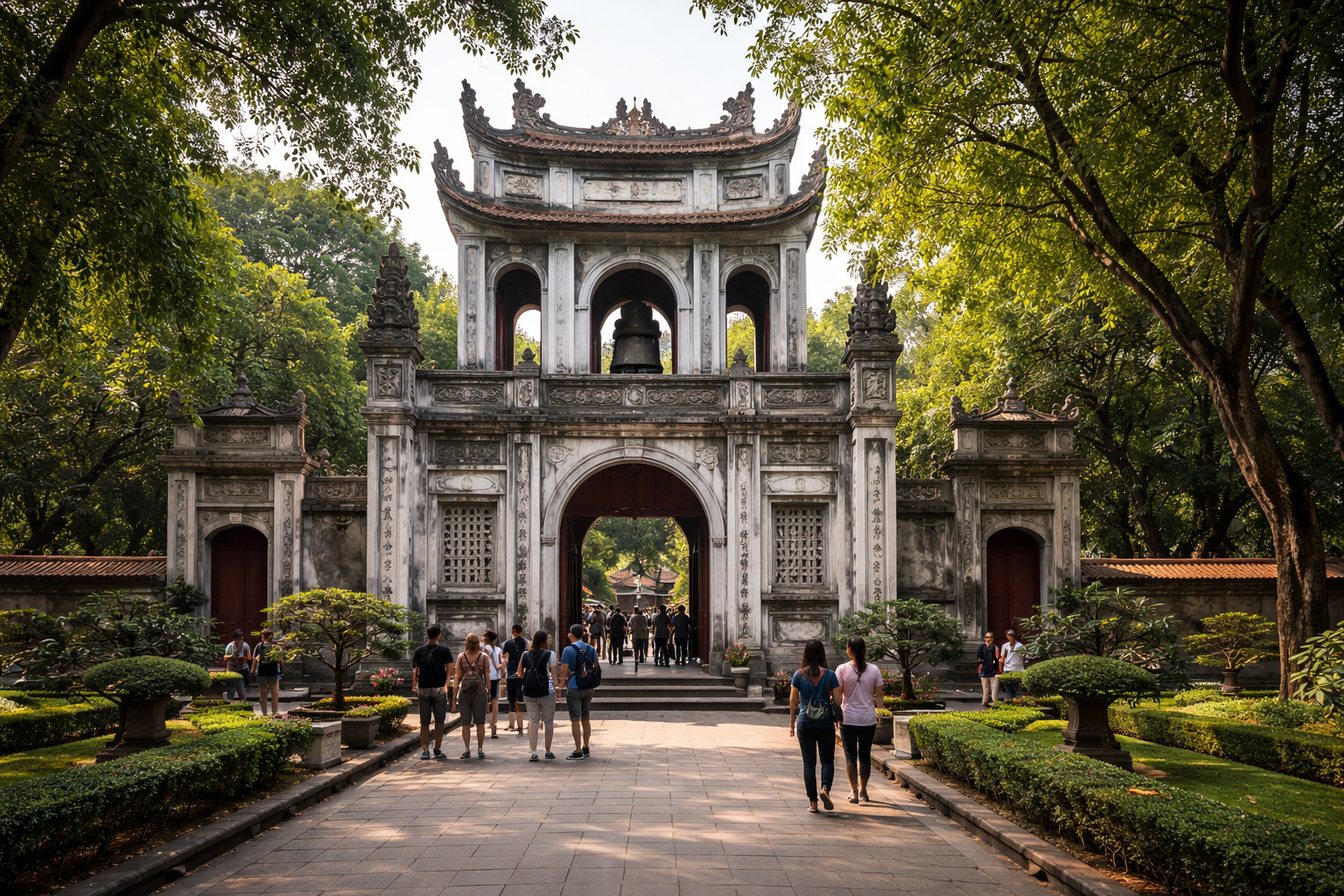
In the heart of Hanoi stands one of Southeast Asia’s most treasured cultural landmarks: the van mieu temple of literature. Revered for its architectural elegance, scholarly legacy, and spiritual symbolism, this historic site offers far more than visual beauty. It embodies centuries of intellectual pursuit, national pride, and philosophical depth. For travelers, historians, and cultural enthusiasts alike, the temple represents a living narrative of Vietnam’s educational foundations and Confucian heritage.
This article explores the origins, architectural features, cultural significance, and enduring relevance of this iconic monument, providing a comprehensive understanding of why it remains a defining symbol of Vietnam.
Historical Origins of the Temple
Foundation and Early Purpose
Constructed in 1070 during the reign of Emperor Ly Thanh Tong, the van mieu temple of literature was originally dedicated to the teachings of Confucius and his disciples. At a time when Confucian philosophy strongly influenced governance and social structure, establishing a temple devoted to learning demonstrated a national commitment to scholarship and moral cultivation.
In 1076, the site became home to Vietnam’s first national university, known as Quoc Tu Giam. This institution educated royal family members and later expanded to train exceptional students from across the country. For centuries, it served as the intellectual heart of the nation, shaping generations of mandarins and administrators.
A Symbol of Educational Excellence
The temple quickly evolved beyond a place of worship. It became an enduring symbol of academic rigor and scholarly achievement. Successful doctoral candidates had their names inscribed on stone stelae mounted on turtle-shaped pedestals, an honor that immortalized their contributions to the nation. These engraved tablets still stand today as tangible reminders of Vietnam’s long-standing respect for education.
Architectural Design and Symbolism
Traditional Layout and Structure
The architectural layout of the van mieu temple of literature follows classical Confucian principles, emphasizing symmetry, balance, and harmony with nature. The complex consists of five courtyards arranged along a central axis, each separated by walls and traditional gates.
Visitors enter through the imposing Van Mieu Gate before progressing through landscaped gardens, tranquil ponds, and ceremonial halls. The use of red lacquered wood, tiled roofs, and intricate carvings reflects traditional Vietnamese craftsmanship. Every structure within the complex serves a symbolic purpose, reinforcing the temple’s philosophical foundation.
The Khue Van Cac Pavilion
One of the most recognizable features is the Khue Van Cac, or Pavilion of the Constellation of Literature. Built in 1805, this elegant wooden structure rests on four sturdy pillars and features circular windows representing the sun. The pavilion has become an unofficial emblem of Hanoi, frequently appearing in cultural publications and city symbols.
Its elevated position signifies enlightenment and intellectual aspiration, reinforcing the temple’s identity as a sanctuary of wisdom.
The Doctoral Stelae
The stone stelae are among the temple’s most remarkable artifacts. Carved between 1484 and 1780, these tablets record the names of scholars who passed royal examinations. Each turtle pedestal symbolizes longevity and wisdom, values deeply embedded in Confucian thought.
These stelae have been recognized by UNESCO as part of the Memory of the World Programme, affirming their global historical importance. They offer rare insight into Vietnam’s examination system and its meritocratic traditions.
Cultural and Philosophical Significance
Confucian Influence in Vietnamese Society
Confucianism shaped Vietnamese governance, ethics, and education for centuries. The van mieu temple of literature stands as a physical manifestation of these principles. Respect for teachers, devotion to learning, and moral responsibility were central values promoted within its walls.
Students and families continue to visit the temple today, especially before important examinations, to pray for academic success. This enduring practice illustrates how deeply Confucian ideals remain woven into Vietnamese culture.
National Identity and Pride
Beyond its philosophical roots, the temple represents resilience and continuity. Despite wars and political transformations, it has remained a revered national monument. Its preservation reflects Vietnam’s commitment to honoring intellectual heritage alongside rapid modernization.
In a rapidly developing urban landscape, the temple offers a serene contrast to Hanoi’s bustling streets. It stands not only as a relic of the past but as a bridge connecting historical identity with contemporary aspirations.
Visitor Experience and Practical Insights
A Journey Through Tranquility
Walking through the van mieu temple of literature provides a contemplative experience. The shaded pathways, lotus ponds, and manicured gardens create an atmosphere of calm reflection. Unlike many crowded tourist attractions, the temple invites slow exploration and thoughtful observation.
Morning visits often provide the most peaceful experience, allowing visitors to appreciate architectural details and historical inscriptions without distraction.
Cultural Etiquette
As an active site of cultural reverence, visitors should dress modestly and behave respectfully. Photography is generally permitted, but certain ceremonial areas may have restrictions. Understanding and honoring local customs enhances the experience and demonstrates appreciation for Vietnamese traditions.
The Temple in Modern Education and Tourism
A Continuing Educational Symbol
Although it no longer functions as a university, the van mieu temple of literature continues to symbolize academic achievement. Graduation ceremonies and educational events are occasionally held within its courtyards, reinforcing its historical mission.
Schools frequently organize field trips to the temple, ensuring that younger generations understand its significance. By connecting students with their intellectual heritage, the site maintains its relevance in modern society.
Tourism and Economic Impact
The temple is one of Hanoi’s most visited attractions, drawing both domestic and international tourists. Its accessibility, historical depth, and architectural beauty make it a cornerstone of cultural tourism in Vietnam.
Revenue generated through tourism supports preservation efforts, ensuring that the complex remains structurally sound and historically authentic. Sustainable management practices help balance visitor access with conservation needs.
Preservation and Restoration Efforts
Over the centuries, the temple has undergone several restoration projects to repair damage caused by time and conflict. Conservation experts prioritize maintaining original materials and architectural integrity.
Vietnamese authorities, in collaboration with international heritage organizations, have implemented measures to protect the stelae and wooden structures from environmental degradation. These efforts reflect a broader national strategy aimed at safeguarding cultural landmarks.
Preservation is not merely about maintaining physical structures; it involves sustaining the values and narratives associated with the site. By investing in restoration, Vietnam reinforces its respect for scholarship and historical continuity.
Why the Temple Remains Relevant Today
Education as a Timeless Value
In an era defined by technological advancement and global connectivity, the foundational importance of education remains unchanged. The van mieu temple of literature reminds visitors that intellectual pursuit has long been central to societal progress.
Its courtyards echo with the legacy of scholars who dedicated their lives to study and public service. That legacy continues to inspire students striving for excellence in contemporary Vietnam.
A Cultural Anchor in a Modern Capital
Hanoi has transformed into a dynamic metropolis, yet the temple endures as a cultural anchor. It provides a sense of grounding amid modernization, reinforcing historical continuity within an evolving urban landscape.
By preserving such landmarks, Vietnam demonstrates that development and tradition can coexist harmoniously. The temple’s enduring presence encourages reflection on how societies can honor their past while embracing the future.
Conclusion
The van mieu temple of literature stands as a testament to Vietnam’s profound respect for knowledge, moral integrity, and cultural heritage. From its origins as a Confucian sanctuary to its role as the nation’s first university, it has shaped the intellectual foundations of the country for nearly a millennium.
Its elegant architecture, engraved stelae, and tranquil courtyards tell a story of dedication to learning that transcends generations. More than a historical monument, it remains a living symbol of aspiration and scholarly pride.
For anyone seeking to understand Vietnam’s cultural depth, the temple offers invaluable insight. It invites visitors not only to admire its beauty but also to reflect on the enduring power of education in shaping nations and individuals alike. In preserving and celebrating this landmark, Vietnam safeguards a legacy that continues to inspire progress, wisdom, and national unity.
