

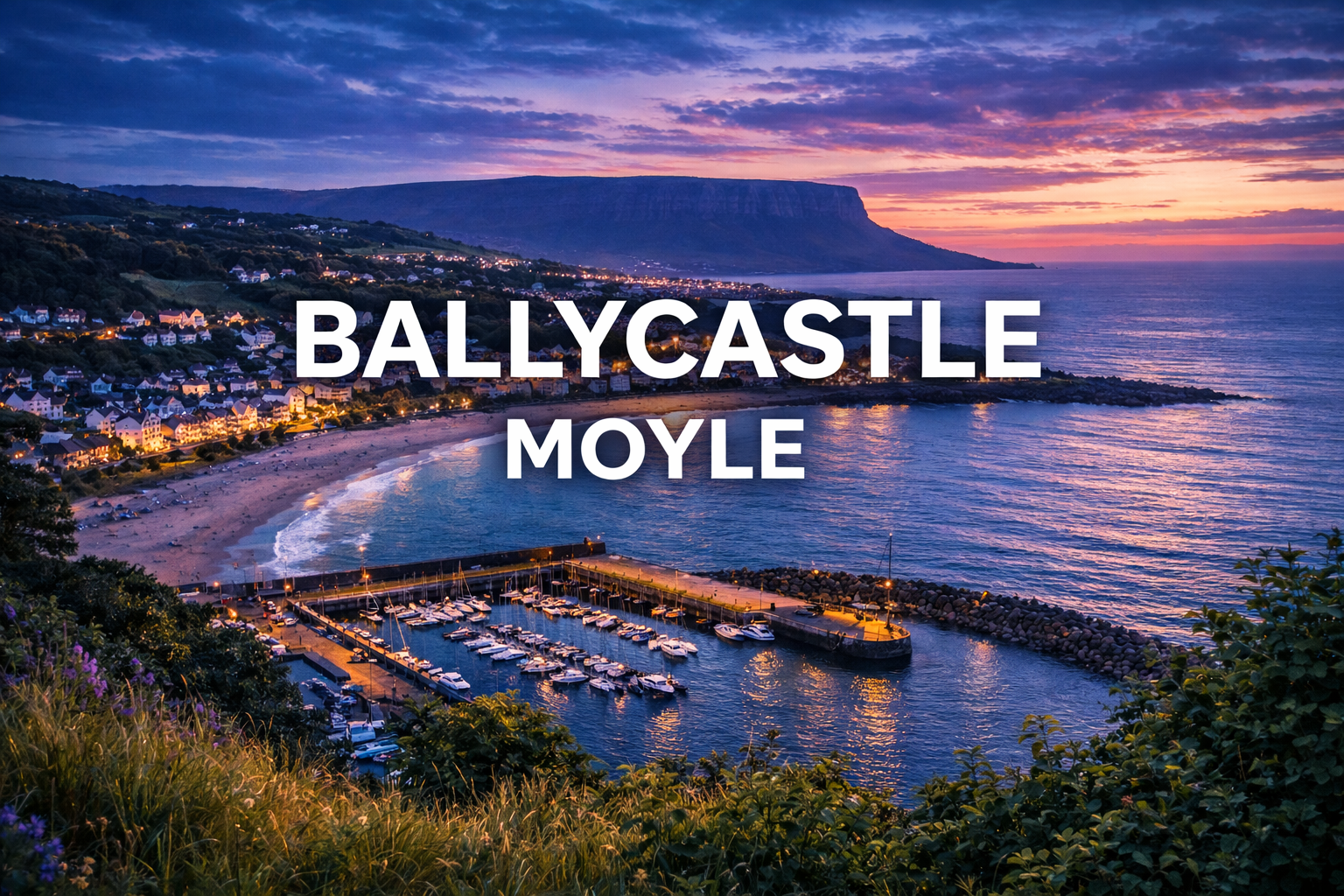
Ballycastle is a small coastal town located in County Antrim, Northern Ireland. It sits within the historic Moyle area, a region long associated with rugged coastlines, maritime culture, and ancient routes between Ireland and Scotland.
When people search for Ballycastle Moyle, they are often looking to understand the town’s background, its geographical setting, and why it holds cultural and historical importance. Ballycastle is not just a scenic stop; it is deeply connected to the wider Moyle region through history, governance, and community life.
Where Ballycastle Is Located
Coastal Position and Natural Setting
Ballycastle lies on the north coast of County Antrim, facing the narrow stretch of sea known as the North Channel. On clear days, the Scottish coastline can be seen across the water, reminding visitors of centuries-old connections between the two lands.
The town is framed by dramatic natural features. To the east, Fair Head rises sharply from the sea, while to the west, rolling countryside stretches toward the Giant’s Causeway area. This unique position makes Ballycastle a gateway to some of Northern Ireland’s most striking landscapes.
The Meaning of Moyle
The term “Moyle” comes from the Irish Maigh Eoile, often interpreted as “plain of the yews.” Historically, Moyle referred to a barony and later a district council area that included Ballycastle and surrounding villages.
Understanding Moyle helps explain why Ballycastle has long been seen as an administrative and cultural center rather than just a seaside town.
Historical Roots of Ballycastle Moyle
Early Settlement and Medieval Influence
Evidence suggests that the Ballycastle area has been settled since ancient times. Archaeological remains, including raths and early Christian sites, point to long-standing human activity.
During the medieval period, the area became part of the route linking Ulster with western Scotland. Clans, traders, and travelers moved through the Moyle region, using Ballycastle’s natural harbor as a landing point.
The Glens and Clan History
Ballycastle is closely associated with the Glens of Antrim, a culturally rich area shaped by Gaelic traditions. The MacDonnell clan played a major role in the region’s development, leaving behind castles, churches, and stories that still shape local identity.
The influence of these clans helped establish Ballycastle as a strategic and cultural location within Moyle.
Ballycastle as a Port and Market Town
Maritime Importance
For centuries, Ballycastle functioned as a key port. Goods such as coal, limestone, and agricultural produce were exported, while supplies arrived from Scotland and other parts of Ireland.
The harbor supported fishing families and traders, creating a strong maritime economy that defined daily life. Even today, the sea remains central to Ballycastle’s character.
Market Traditions
As part of the Moyle region, Ballycastle developed into a market town serving nearby rural communities. Weekly markets and fairs brought people together, strengthening social and economic ties.
These traditions helped Ballycastle grow while maintaining close connections to the surrounding countryside.
Cultural Life in Ballycastle Moyle
Language and Identity
The Moyle area has long been a place where Irish, Ulster Scots, and English influences meet. This mix is reflected in local place names, accents, and traditions.
Irish language initiatives and cultural events continue to highlight Ballycastle’s connection to its Gaelic roots without overshadowing its diverse heritage.
Music and Storytelling
Traditional music has always played an important role in Ballycastle life. Sessions in local venues often feature fiddles, flutes, and storytelling that reflect the wider Moyle cultural landscape.
These informal gatherings are less about performance and more about preserving shared memory and community bonds.
Natural Landmarks Around Ballycastle
Fair Head and Clifftop Views
Fair Head is one of the most recognizable landmarks near Ballycastle. Its basalt cliffs rise dramatically above the sea, attracting walkers, climbers, and nature enthusiasts.
The area offers panoramic views across the North Channel and provides insight into the geological forces that shaped the Moyle coastline.
Beaches and Coastal Walks
Ballycastle’s beach stretches along the town’s edge, offering a mix of sand and shingle. Coastal paths link the town to nearby headlands and bays, allowing visitors to explore the landscape at a slower pace.
These routes highlight the close relationship between Ballycastle and the natural environment of Moyle.
Ballycastle Moyle in Modern Times
Changes in Local Governance
In recent decades, administrative boundaries have changed, and the former Moyle District Council was merged into larger council areas. Despite this, the term “Moyle” remains widely used in local conversation and identity.
Ballycastle continues to be viewed as the heart of the Moyle area, both geographically and culturally.
Community and Daily Life
Modern Ballycastle balances tradition with contemporary living. Local schools, sports clubs, and community groups play a key role in maintaining social connections.
Life in Ballycastle Moyle is shaped by a slower pace, where seasonal rhythms, weather, and local events still matter.
Festivals and Seasonal Events
Ould Lammas Fair
One of the most well-known events associated with Ballycastle is the Ould Lammas Fair. Although it has evolved over time, the fair remains a symbol of the town’s role as a gathering place for the wider Moyle region.
The event reflects centuries-old traditions of trade, celebration, and community.
Smaller Community Gatherings
Beyond large festivals, Ballycastle hosts smaller cultural and seasonal events. These often focus on local heritage, crafts, and storytelling, offering a more intimate look at Moyle life.
Such gatherings reinforce the town’s strong sense of place.
Why People Search for Ballycastle Moyle
Interest in Local History
Many people searching for Ballycastle Moyle are researching family history, regional identity, or historical geography. The area’s layered past makes it a rich subject for study and exploration.
Understanding the Moyle context adds depth to any research about Ballycastle itself.
Travel and Exploration
Others are planning visits and want to know what makes Ballycastle distinct from other coastal towns. The answer often lies in its combination of natural beauty, historical depth, and living culture.
Ballycastle Moyle offers more than scenery; it provides a sense of continuity between past and present.
The Lasting Significance of Ballycastle Moyle
A Link Between Land and Sea
Ballycastle’s importance has always come from its position between land and sea. As part of the Moyle area, it connected inland communities with maritime routes, shaping trade and culture.
This role continues to influence how the town sees itself today.
Preserving Identity in a Changing World
Despite administrative changes and modern pressures, Ballycastle retains a strong connection to the idea of Moyle. The name carries meaning, history, and shared memory.
For residents and researchers alike, Ballycastle Moyle represents a place where history remains visible in everyday life.
Conclusion
Ballycastle Moyle is more than a geographical phrase. It reflects a town shaped by its coastal setting, its historical role, and its cultural ties to the wider Moyle region. From ancient settlements and clan history to modern community life, Ballycastle stands as a living example of how place and identity evolve together.
For anyone seeking to understand Northern Ireland’s north coast beyond surface-level attractions, exploring Ballycastle through the lens of Moyle offers lasting value and insight.
