

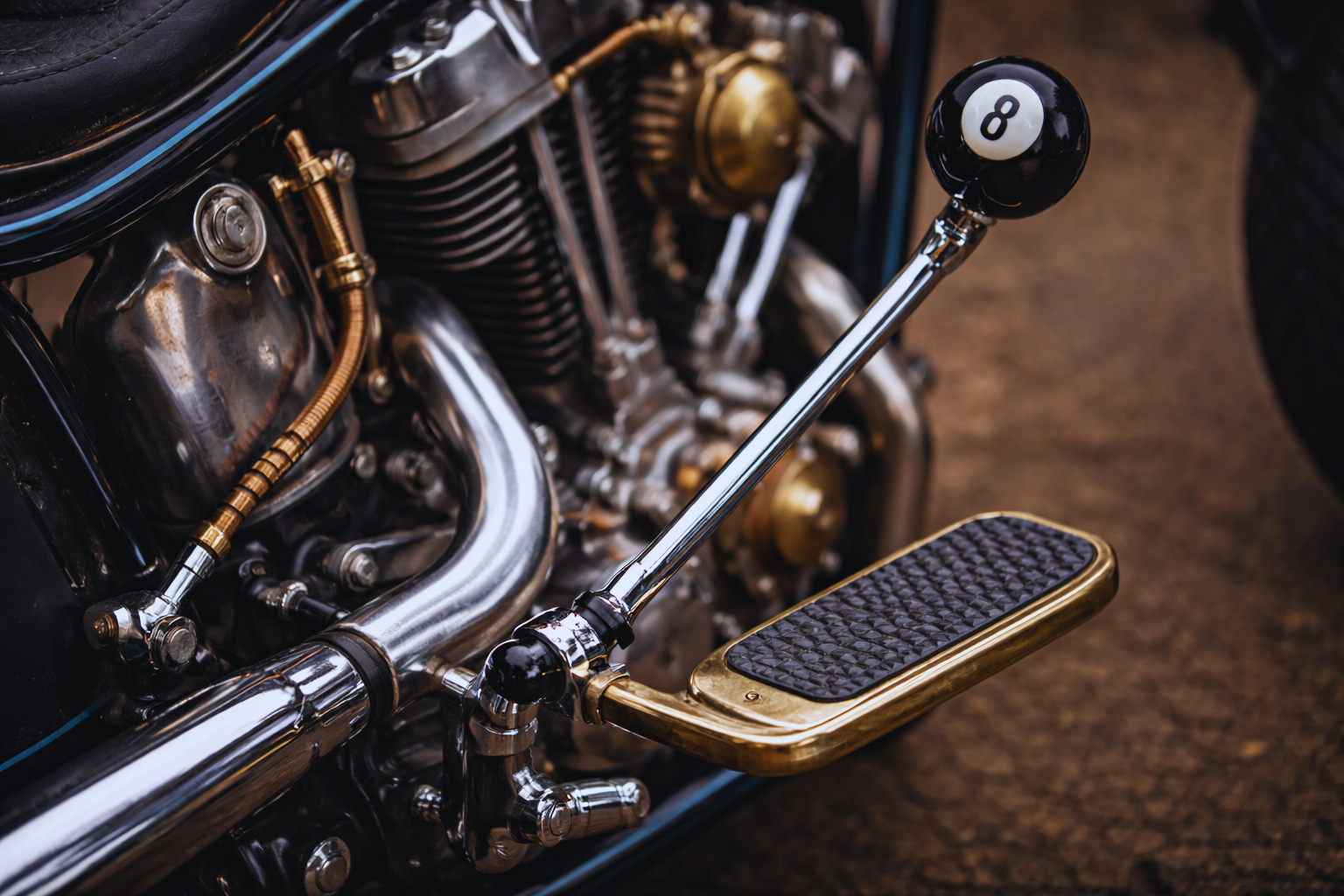
The suicide clutch jockey shift setup is one of the most distinctive control systems in motorcycle culture. It’s mechanical, demanding, and deeply tied to custom builds, especially vintage choppers and bobbers. Riders are drawn to it not for convenience, but for connection and control.
Unlike modern motorcycles designed for ease, this setup strips riding back to its raw fundamentals. Every movement matters, and every shift is intentional.
What Is a Suicide Clutch Jockey Shift?
A suicide clutch jockey shift replaces the standard hand clutch and foot shifter with two different controls. The clutch is operated by the rider’s foot, usually on the left side, while the transmission is shifted by hand using a lever mounted near the tank or seat.
The term “suicide clutch” comes from the lack of a neutral fail-safe. If the rider takes their foot off the clutch at the wrong time, the bike can lurch forward or stall. There’s no margin for error, which is exactly why some riders love it.
How the System Works
Foot-Operated Clutch
The clutch pedal disengages and engages the drivetrain. Some setups use a rocker pedal, while others rely on a direct press-and-release motion. Many are not spring-loaded, meaning the rider must hold the clutch in manually.
This design forces constant awareness. The bike will not forgive distraction.
Hand-Shifted Transmission
The jockey shifter is a metal lever connected directly to the transmission. Shifting gears requires removing one hand from the handlebars, which changes balance and control dynamics, especially at low speeds.
Each gear change is deliberate and physical, creating a more immersive riding experience.
Why Riders Choose a Suicide Clutch Jockey Shift
A Direct Mechanical Feel
Modern motorcycles isolate the rider from the machine. This setup does the opposite. Riders feel the clutch engagement, gear changes, and engine response without electronic buffers.
For many, this is riding in its purest form.
Custom and Vintage Appeal
Suicide clutch jockey shift setups are closely associated with old-school choppers and rigid frames. They complement minimalist builds where aesthetics and mechanical honesty matter more than comfort.
The exposed linkage and hand shifter also become visual centerpieces.
Skill and Engagement
Riding with this system requires practice and focus. Starting, stopping, and maneuvering in traffic become learned skills rather than automatic actions.
Some riders see this challenge as a badge of honor rather than a drawback.
Challenges and Risks to Consider
Learning Curve
This is not beginner-friendly. New riders often struggle with smooth starts and stops, especially on hills or in traffic. Muscle memory from modern bikes does not transfer easily.
Mistakes tend to be immediate and noticeable.
Reduced Safety Margin
Taking one hand off the bars while managing throttle, balance, and clutch reduces stability. Emergency reactions can be slower compared to conventional controls.
This setup rewards calm, experienced riders rather than reactive ones.
Traffic and Urban Riding
Stop-and-go traffic is where the system feels most demanding. Holding the clutch with your foot while balancing at low speeds can become tiring over time.
Many riders prefer using this setup for cruising rather than daily commuting.
Legal and Practical Considerations
Street Legality
Laws vary by region. Some areas require specific control layouts or safety features. Before riding on public roads, it’s important to confirm that a foot clutch and hand shifter are legal where you live.
Inspections and insurance may also be affected.
Maintenance and Setup
Cable routing, linkage alignment, and pedal geometry all affect rideability. A poorly set up system can feel harsh or unpredictable.
Regular inspection is essential, especially since many setups are custom-built.
Is It Right for You?
A suicide clutch jockey shift isn’t about speed or efficiency. It’s about involvement. Riders who enjoy mechanical simplicity, vintage style, and hands-on control often find it deeply rewarding.
Those who value convenience, safety features, or daily usability may find it frustrating.
The decision usually comes down to intent. If riding is an experience rather than a task, this setup can be incredibly satisfying.
Final Thoughts
The suicide clutch jockey shift represents a different philosophy of motorcycling. It prioritizes connection over comfort and skill over automation. While it demands respect and practice, it also offers a level of engagement few modern bikes can match.
For the right rider, it’s not just a control system. It’s a statement about how and why they ride.
