

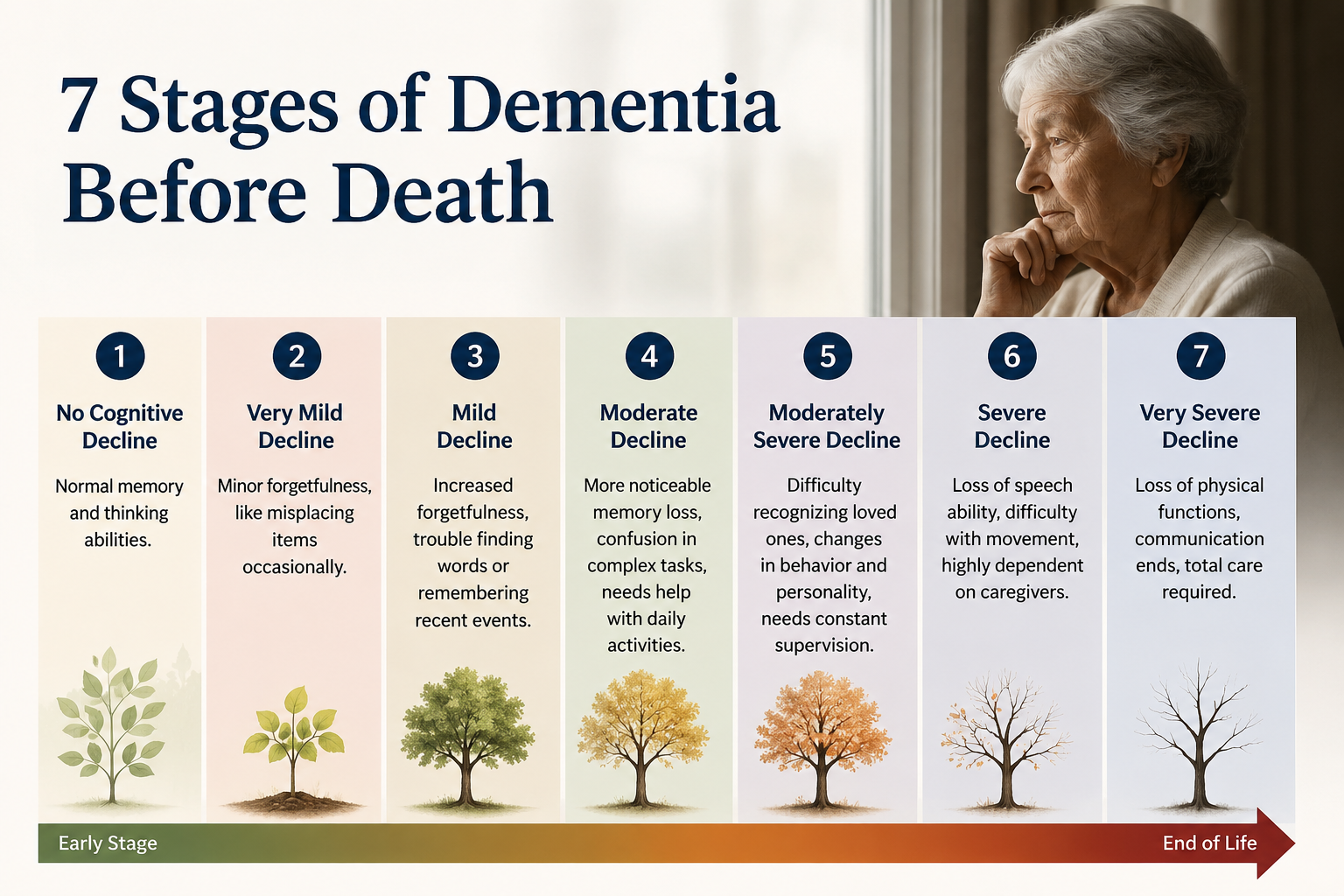
Dementia is a progressive condition that affects memory, thinking, behavior, and the ability to perform everyday tasks. While many people understand that dementia gradually worsens over time, fewer know how the condition progresses in its final stages. Learning about the 7 stages of dementia before death can help families prepare emotionally, make informed care decisions, and provide compassionate support to their loved ones.
Every person experiences dementia differently. The speed of progression depends on the type of dementia, overall health, age, and other medical conditions. Recognizing this variability helps families feel more empathetic and less anxious about unpredictable changes.
This guide explains each stage in simple language while offering practical advice for caregivers and family members.
Understanding Dementia Progression
Dementia is not a single disease. Instead, it is a group of symptoms caused by conditions that damage brain cells. Common forms include Alzheimer’s disease, vascular dementia, Lewy body dementia, and frontotemporal dementia.
Healthcare professionals often describe dementia using the Global Deterioration Scale (GDS), which divides cognitive decline into seven stages. These stages provide a general framework for understanding how symptoms evolve from mild forgetfulness to severe physical decline.
Although no two people follow the same path, recognizing these stages helps families anticipate changing needs and plan appropriate medical and emotional support, fostering a sense of control and preparedness.
Stage 1: No Cognitive Decline
The first stage represents normal brain function. A person does not experience memory problems or changes in thinking that interfere with daily life. Medical evaluations typically find no evidence of dementia at this point.
People continue working, socializing, managing finances, driving, and completing daily activities independently. Although this stage is technically included in the seven-stage model, dementia symptoms have not yet appeared.
Stage 2: Very Mild Cognitive Decline
During the second stage, a person may occasionally forget names, misplace everyday objects, or struggle to remember appointments. These changes are often considered part of normal aging rather than dementia.
Family members usually do not notice significant differences because the individual remains fully independent. Standard medical examinations may also fail to detect any cognitive impairment.
Not everyone in this stage will develop dementia, but persistent or worsening memory concerns should be discussed with a healthcare professional.
Stage 3: Mild Cognitive Decline
Stage three is when early dementia symptoms often become noticeable. Friends, coworkers, or family members may begin recognizing subtle changes in memory and concentration.
Common signs include:
- Frequently losing important items.
- Difficulty finding the right words.
- Trouble planning or organizing tasks.
- Forgetting recently learned information.
- Reduced work performance.
Many people can still live independently but may require reminders or extra time to complete complex tasks. An early diagnosis during this stage allows families to begin planning for future care and treatment options.
Stage 4: Moderate Cognitive Decline
In stage four, symptoms become more apparent and easier for healthcare providers to diagnose. Memory loss begins to affect daily life more consistently.
A person may:
- Forget recent conversations.
- Have difficulty managing finances.
- Lose track of dates or events.
- Struggle with meal planning.
- Withdraw from social situations.
Although independence remains possible in some areas, additional support becomes increasingly important. Caregivers often begin assisting with appointments, medications, and household responsibilities.
Emotional changes such as anxiety, frustration, or depression may also develop because the individual becomes aware of their declining abilities.
Stage 5: Moderately Severe Cognitive Decline
At stage five, dementia significantly interferes with everyday life. People usually cannot safely live alone without regular assistance.
Typical symptoms include:
- Forgetting home addresses or phone numbers.
- Confusion about time or location.
- Difficulty choosing appropriate clothing.
- Needing help with daily routines.
- Increased reliance on caregivers.
Despite these challenges, many individuals still recognize close family members and can participate in meaningful conversations.
Maintaining familiar routines, offering gentle reassurance, and creating a safe environment can greatly improve quality of life during this stage.
Stage 6: Severe Cognitive Decline
The sixth stage represents advanced dementia. Memory loss becomes profound, and personality changes may become more noticeable.
Individuals often:
- Forget the names of close relatives.
- Require help with dressing and bathing.
- Experience urinary or bowel incontinence.
- Wander or become disoriented.
- Show increased confusion during evenings.
- Display agitation or behavioral changes.
Speech becomes more limited, and communication may rely heavily on facial expressions, body language, or emotional responses.
Caregivers often need to provide full-time assistance. Professional home care or residential memory care facilities may become necessary depending on the individual’s needs.
Providing comfort, maintaining a calm environment, and responding patiently to behavioral changes are essential aspects of care.
Stage 7: Very Severe Cognitive Decline
The seventh and final stage is the most advanced phase of dementia before death. At this point, extensive brain damage severely limits physical and mental abilities.
People typically lose the ability to:
- Speak complete sentences.
- Walk independently.
- Sit without support.
- Swallow safely.
- Control body movements.
Eventually, many individuals become bedridden and require complete assistance with every aspect of daily care.
Because swallowing difficulties increase the risk of aspiration pneumonia, infections become more common. Weight loss, dehydration, and reduced appetite are also frequent during this stage.
Medical care often shifts toward comfort-focused or palliative care, emphasizing dignity, pain management, and emotional support rather than aggressive treatments.
Signs That Death May Be Near
While every situation is unique, several changes commonly occur during the final weeks or days of life.
These may include:
- Sleeping most of the day.
- Little or no interest in eating.
- Difficulty swallowing food or fluids.
- Minimal communication.
- Irregular breathing patterns.
- Cool hands and feet.
- Decreased responsiveness.
These symptoms do not necessarily appear in every person, but they often indicate that the body is gradually slowing down.
Healthcare providers and hospice teams can help families understand what to expect and ensure the person remains as comfortable as possible.
Caring for Someone During Advanced Dementia
Providing care during the later stages requires patience, flexibility, and emotional resilience.
Helpful caregiving strategies include maintaining a predictable daily routine, speaking calmly using simple sentences, offering reassurance rather than correction, and creating a quiet, safe environment.
Physical comfort is equally important. Regular repositioning helps prevent pressure sores, while proper skin care, oral hygiene, and hydration support overall well-being.
Family caregivers should also remember to care for themselves. Accepting help from relatives, professional caregivers, or support groups can reduce stress and prevent caregiver burnout.
Emotional Support for Families
Watching someone progress through the 7 stages of dementia before death is emotionally challenging. Many caregivers experience sadness, exhaustion, guilt, or anticipatory grief long before their loved one passes away.
Seeking emotional support is not a sign of weakness. Counseling, dementia support groups, faith communities, and hospice organizations can provide valuable guidance and reassurance.
Sharing responsibilities among family members also allows caregivers to rest and maintain their own physical and mental health.
Can Dementia Progression Be Slowed?
Although there is currently no cure for most forms of dementia, early diagnosis and proper treatment may help manage symptoms and improve quality of life.
Doctors may recommend medications, cognitive stimulation, regular exercise, balanced nutrition, social engagement, and treatment of other medical conditions.
Healthy lifestyle habits cannot completely stop dementia progression, but they may help some individuals maintain independence for longer.
When Hospice Care Should Be Considered
Hospice care focuses on comfort rather than curing illness. It becomes appropriate when dementia reaches its advanced stages and life expectancy is believed to be limited.
Hospice professionals provide:
Pain Management
Specialists help control discomfort, breathing difficulties, and other symptoms while prioritizing dignity and comfort.
Emotional Guidance
Counselors support both patients and family members through difficult decisions and emotional challenges.
Caregiver Assistance
Hospice teams teach caregivers how to provide daily care while offering respite services and practical support.
Many families report that hospice improves both the patient’s comfort and their own confidence during the final stage of dementia.
Frequently Asked Questions
How long does each stage of dementia last?
There is no fixed timeline. Some people spend years in one stage, while others progress more rapidly depending on the underlying disease and overall health.
Does everyone experience all seven stages?
Not necessarily. The progression varies, especially among different types of dementia. Some symptoms may overlap or appear in a different order.
Is pain common during the final stage?
Dementia itself does not always cause pain, but related medical conditions can. Healthcare providers regularly assess comfort and provide appropriate pain relief when needed.
Can someone with advanced dementia recognize family?
Recognition gradually declines. Some individuals continue responding to familiar voices, music, or gentle touch even after verbal communication becomes limited.
Conclusion
Understanding the 7 stages of dementia before death helps families prepare for one of life’s most difficult journeys. While dementia gradually affects memory, communication, movement, and independence, compassionate care can greatly improve comfort and preserve dignity throughout every stage.
Every person’s experience is unique, making regular communication with healthcare professionals essential. Early planning, emotional support, and access to palliative or hospice care allow families to focus less on uncertainty and more on meaningful moments together.
Although dementia changes many aspects of life, kindness, patience, and human connection remain powerful sources of comfort for both patients and those who care for them.
