

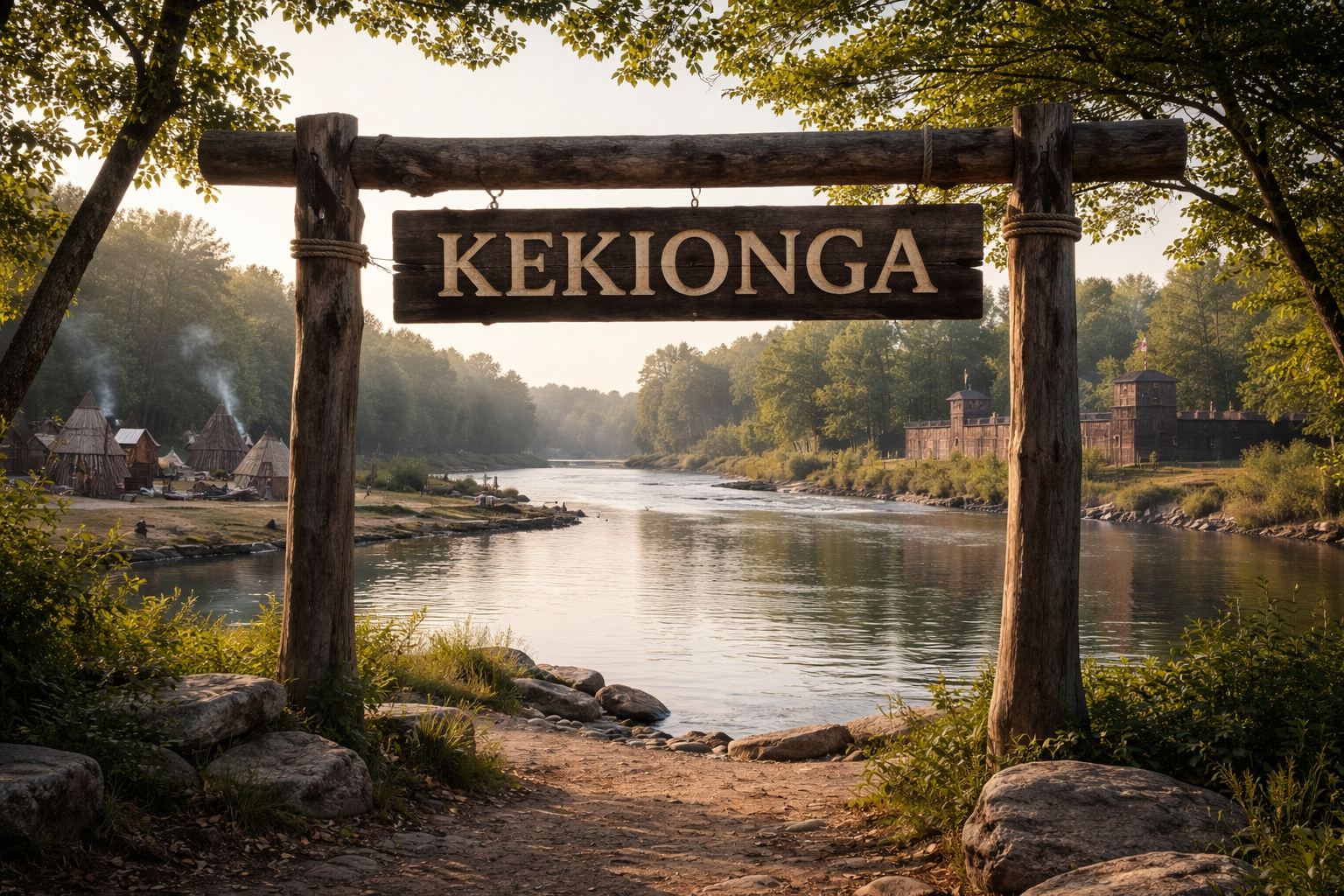
The story of kekionga is deeply woven into the early history of North America. Long before modern cities rose across the Midwest, this significant settlement stood as a political, cultural, and strategic center for Indigenous nations. Situated near the meeting point of rivers that shaped both geography and trade, kekionga played a crucial role in the development of regional alliances, colonial interactions, and military conflicts. Today, historians and cultural scholars continue to explore its legacy, recognizing it as a key location in understanding the complex relationships between Native American tribes and European powers.
This article examines the historical importance of kekionga, its geographic significance, its role in colonial struggles, and its enduring legacy in American history.
Geographic and Cultural Foundations
Kekionga was located near the confluence of the St. Joseph, St. Marys, and Maumee Rivers in present-day Fort Wayne. This strategic position made it a natural hub for transportation and communication. Rivers functioned as highways in the eighteenth century, and settlements located at key junctions often became centers of commerce and diplomacy.
The village served as a principal town of the Miami Tribe, particularly the Atchatchakangouen division. Its location allowed the Miami people to control access between the Great Lakes and the Ohio River Valley. Because of this, kekionga became an influential crossroads for trade networks that extended far beyond its immediate surroundings.
The fertile lands surrounding the settlement supported agriculture, hunting, and fishing. Crops such as corn, beans, and squash sustained the community, while nearby forests provided game. The rivers offered abundant fish and facilitated trade with neighboring tribes and European traders.
Kekionga and the Miami Confederacy
Political Significance
Kekionga was more than a village; it functioned as a political capital for the Miami Confederacy. Leaders gathered there to discuss alliances, resolve disputes, and negotiate with European representatives. The settlement symbolized unity and authority among Miami groups and neighboring tribes.
The Miami people skillfully balanced relationships with both the French and the British during the colonial period. Through diplomacy and strategic alliances, they sought to preserve autonomy and protect their lands. Kekionga’s leadership often played a central role in these negotiations.
Trade and Diplomacy
French traders established relationships with the Miami in the early eighteenth century. The French built Fort Miami near kekionga in 1704 to secure their influence and protect trading interests. The presence of the fort strengthened economic ties but also marked the beginning of intensified European involvement in the region.
Following the French defeat in the French and Indian War, control of the region passed to the British. This shift altered trade dynamics and created tension between Native communities and colonial authorities. Despite these changes, kekionga remained a significant center of Indigenous resistance and diplomacy.
Role in Major Conflicts
The American Revolution and Aftermath
During the American Revolutionary War, the Miami and other tribes faced difficult choices. Many Native leaders aligned with the British, hoping to prevent American expansion into their territories. Kekionga became a focal point for military planning and alliance-building.
After the war, the newly formed United States sought to assert control over the Northwest Territory. Indigenous nations resisted these efforts, leading to a series of conflicts collectively known as the Northwest Indian War. Kekionga’s strategic location made it a target for American forces.
The Battle of Fallen Timbers
One of the most decisive moments connected to kekionga was the Battle of Fallen Timbers. Although the battle itself occurred near present-day Ohio, its outcome directly affected the settlement. The defeat of Native forces by General Anthony Wayne weakened Indigenous resistance in the region.
The subsequent signing of the Treaty of Greenville forced Native tribes to cede vast territories to the United States. This agreement significantly diminished the power and influence of kekionga as a political center.
Transition to Fort Wayne
In 1794, following military campaigns, the United States constructed Fort Wayne on the site of the former Native settlement. The fort symbolized a new era of American control and settlement. Over time, civilian communities grew around the fort, eventually developing into the modern city of Fort Wayne.
This transformation marked a dramatic shift in the region’s identity. While the physical landscape changed, the historical memory of kekionga continued to shape narratives about the area’s origins.
Cultural Legacy and Historical Recognition
Preservation of Indigenous History
Today, scholars and members of the Miami community work to preserve the history of kekionga. Archaeological studies provide insights into daily life, trade networks, and settlement patterns. These findings enrich understanding of Indigenous governance and culture prior to large-scale American expansion.
Modern descendants of the Miami people maintain cultural traditions that connect them to their ancestral homeland. Although many were forcibly relocated in the nineteenth century, cultural memory remains strong.
Educational and Public Awareness
Museums, historical societies, and educational institutions in Indiana increasingly recognize the importance of Native American heritage. By highlighting the history of kekionga, they aim to present a more inclusive account of regional development.
Public awareness initiatives also encourage dialogue about land rights, treaty obligations, and historical justice. Understanding the role of kekionga helps contextualize broader themes in American history, including colonization, resistance, and adaptation.
Economic and Strategic Importance
The geographic placement of kekionga was not accidental. Control of river systems translated into economic strength. Trade goods such as furs, tools, and textiles moved through the settlement, linking it to both Native and European markets.
Strategically, the location offered defensive advantages. The surrounding waterways and terrain allowed inhabitants to monitor movement and respond to threats. This strategic value explains why European powers and later the United States prioritized control over the area.
Kekionga in Contemporary Discourse
In recent years, historians have revisited early American narratives to incorporate Indigenous perspectives. Kekionga features prominently in these discussions as a symbol of resilience and sovereignty. Rather than viewing it solely as a precursor to Fort Wayne, scholars emphasize its independent significance.
Academic research often explores how Indigenous diplomacy shaped colonial policies. By examining kekionga, researchers uncover evidence of sophisticated governance structures and international relations long before American statehood.
Conclusion
Kekionga stands as a powerful reminder of the vibrant Indigenous civilizations that shaped North America. As a political capital, trade center, and strategic stronghold, it influenced the course of regional history for decades. Its location near the rivers of present-day Fort Wayne positioned it at the center of diplomacy, commerce, and conflict.
Although military defeat and territorial treaties diminished its authority, the legacy of kekionga endures. Modern scholarship and cultural preservation efforts continue to shed light on its historical significance. By recognizing its role in shaping early American history, we gain a deeper appreciation for the resilience and leadership of the Miami people.
Understanding kekionga is not merely an academic exercise; it is a step toward acknowledging the foundational contributions of Indigenous nations to the American story. Through continued research and respectful dialogue, its legacy remains alive in both memory and place.
