

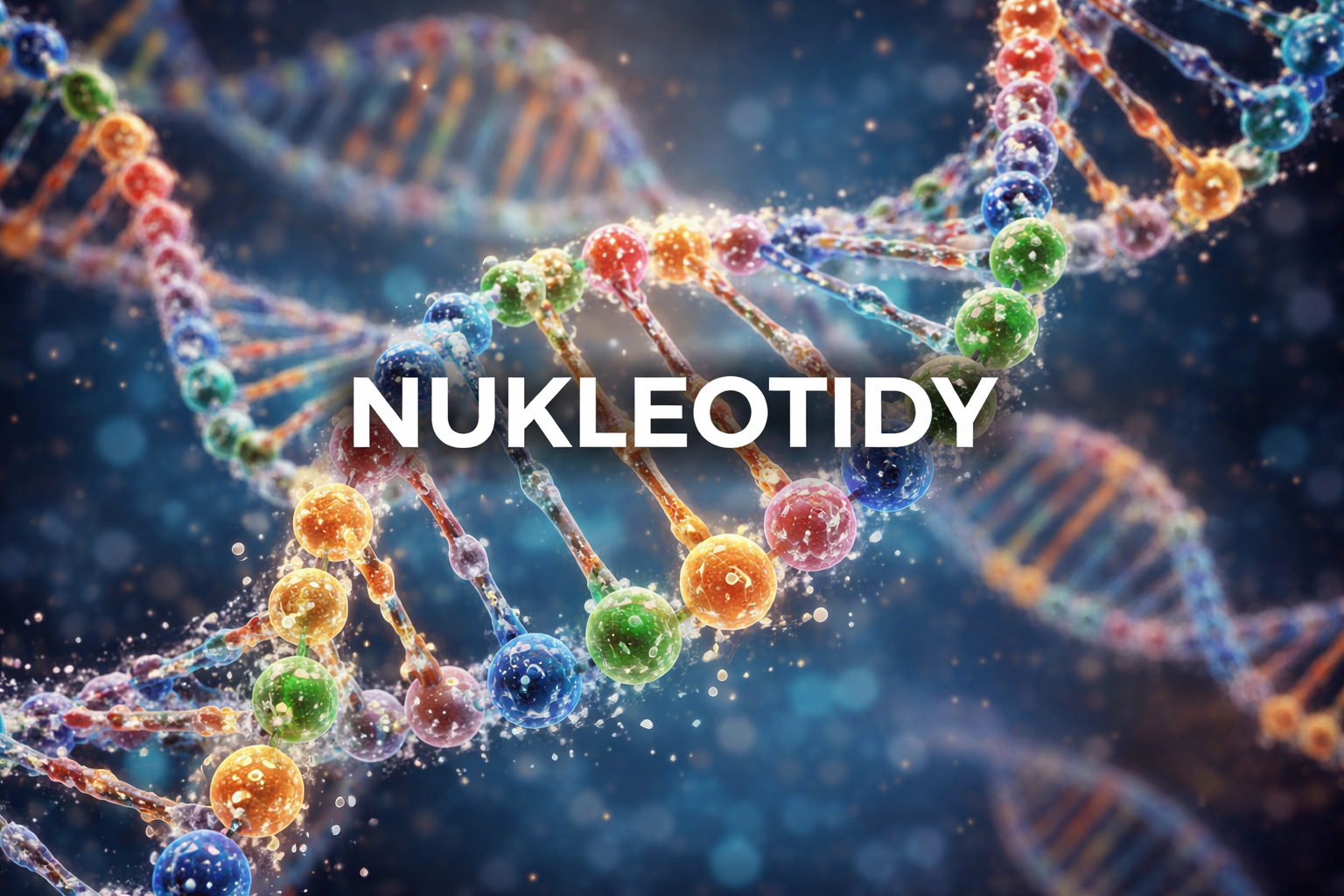
Nukleotidy are fundamental molecules that sit at the core of all living systems. They form the structural basis of DNA and RNA, making them essential for genetic information, cell division, and biological inheritance. Beyond genetics, nukleotidy play active roles in energy transfer, cell signaling, and metabolism.
This article explores nukleotidy in a clear, human way, focusing on understanding rather than promotion.
What are nukleotidy
Nukleotidy are organic molecules composed of three main parts. Each one contains a nitrogenous base, a five-carbon sugar, and one or more phosphate groups.
These components work together to create a versatile molecule capable of storing information or powering cellular processes. Although small, nukleotidy are involved in nearly every biochemical reaction that sustains life.
Core components of nukleotidy
The nitrogenous base determines the type of nucleic acid involved. Bases such as adenine, guanine, cytosine, thymine, and uracil define genetic coding.
The sugar provides structure and stability. In DNA, this sugar is deoxyribose, while RNA uses ribose.
The phosphate group connects nucleotidy into long chains. These chains form the backbone of nucleic acids and enable molecular communication.
Nukleotidy and genetic information
One of the most well-known roles of nukleotidy is their function in DNA and RNA. They act as letters in the genetic alphabet, encoding instructions for building proteins.
DNA stores this information long-term. RNA helps translate and execute these instructions within the cell.
DNA as a nucleotidy-based archive
DNA is built from repeating units of nukleotidy. The sequence of these units determines inherited traits and biological identity.
Even a small change in nucleotidy order can alter protein structure. This is why mutations can have profound biological effects.
RNA and dynamic cellular communication
RNA is more flexible and short-lived than DNA. Its nukleotidy-based structure allows it to carry messages, regulate genes, and assist in protein assembly.
Different forms of RNA serve different purposes. All rely on nukleotidy to function accurately and efficiently.
Energy transfer and cellular metabolism
Nukleotidy are not limited to genetic roles. They are central to how cells store and use energy.
Adenosine triphosphate, commonly known as ATP, is a nucleotidy-based molecule. It acts as the main energy currency in living organisms.
ATP and metabolic balance
ATP stores energy in its phosphate bonds. When these bonds break, energy is released for cellular work.
This process powers muscle contraction, nerve signaling, and chemical synthesis. Without nucleotidy-driven energy transfer, cells would quickly shut down.
Other energy-related nucleotidy
GTP, NAD, and FAD are additional examples. They participate in metabolism, redox reactions, and biosynthesis.
Each of these molecules is built on a nucleotidy framework. Their versatility highlights the adaptability of this molecular structure.
Nukleotidy in cell signaling
Cells must communicate to survive. Nukleotidy play a crucial role in transmitting signals both inside and between cells.
Certain nucleotidy-derived molecules act as messengers. They trigger responses such as growth, repair, or immune activation.
Second messengers and regulation
Cyclic AMP is a well-known signaling molecule. It is derived from a nucleotidy and helps regulate enzymes and gene expression.
These signaling pathways allow cells to respond quickly to changes. They maintain balance in complex biological systems.
Role in immune and stress responses
Some nucleotidy-based signals activate immune defenses. Others help cells adapt to stress or injury.
This makes nukleotidy essential not only for structure but also for responsiveness.
Dietary sources and natural synthesis
The human body can produce nukleotidy on its own. However, they can also be obtained from food.
Plant and animal cells both contain nucleotidy as part of their genetic material.
Endogenous production
Cells synthesize nukleotidy through complex biochemical pathways. These processes require energy, vitamins, and amino acids.
During growth or recovery, demand may increase. This is especially true for rapidly dividing cells.
Dietary contribution and balance
Dietary nucleotidy can support cellular turnover. They may reduce the need for internal synthesis under certain conditions.
While not considered essential nutrients, they still contribute to metabolic efficiency.
Nukleotidy and human health
Research continues to explore the role of nukleotidy in health and disease. Their involvement in DNA repair links them to aging and cancer studies.
They are also being studied for their effects on gut health and immunity.
Cellular repair and regeneration
Tissues with high turnover rely heavily on nucleotidy availability. This includes the intestinal lining, bone marrow, and immune cells.
Adequate supply supports regeneration and resilience. It helps cells maintain accurate genetic replication.
Development and early life
During infancy and childhood, cell growth is rapid. Nukleotidy support this intense biological activity.
They contribute to normal development of organs and systems. This highlights their importance across the lifespan.
Nukleotidy in scientific and medical research
Modern biotechnology depends on nucleotidy-based technologies. DNA sequencing, gene editing, and molecular diagnostics all rely on them.
Understanding nucleotidy behavior has enabled major medical advances.
Genetic testing and diagnostics
Tests for inherited conditions analyze nucleotidy sequences. Small variations can indicate disease risk or treatment response.
This precision medicine approach is transforming healthcare. It demonstrates the practical value of nucleotidy research.
Therapeutic innovation
Some antiviral and anticancer drugs mimic nucleotidy. They interfere with viral replication or uncontrolled cell division.
By targeting nucleotidy pathways, treatments can be highly specific. This reduces damage to healthy cells.
Environmental and evolutionary significance
Nukleotidy are universal across life forms. From bacteria to humans, the same basic molecules are used.
This shared chemistry suggests a common evolutionary origin. It also allows scientists to study life at its most fundamental level.
Evolutionary conservation
The structure of nukleotidy has remained stable over billions of years.Such conservation indicates extraordinary efficiency and adaptability.
Life has evolved around this molecular system.Few biological components are universally important.
Implications for origin-of-life studies
Researchers study nucleotidy to understand how life began.Their ability to store information makes them ideal candidates for early biology.
These studies bridge chemistry, biology, and planetary science.
Final thoughts on nukleotidy
Nukleotidy are far more than abstract biochemical terms.They are the foundation of genetics, energy, and cellular communication.
Their roles connect microscopic chemistry with visible biological outcomes. From growth and repair to evolution and medicine, they shape life at every level.
Understanding nukleotidy offers insight into how living systems function and adapt. It reminds us that even the smallest molecules can have the greatest impact.
