

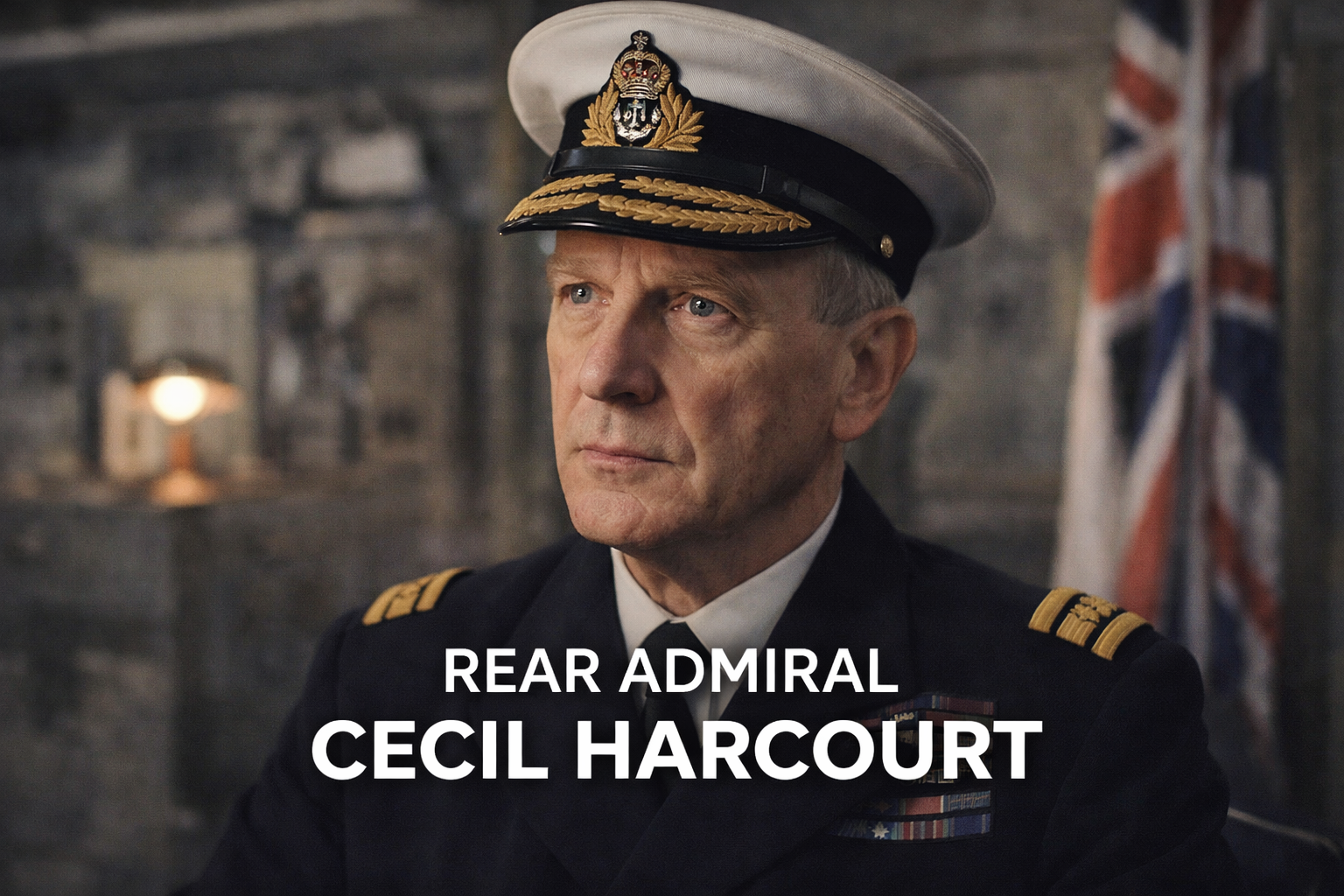
Rear Admiral Cecil Harcourt is not a household name, yet his influence on mid-20th-century history was significant. He operated at the intersection of military command, diplomacy, and imperial transition during one of the most turbulent moments in global affairs. Understanding his role helps clarify how authority shifted in East Asia at the end of the Second World War and how order was restored after years of conflict.
This article explores who Cecil Harcourt was, what he did, and why his actions still matter today.
Early Life and Naval Foundations
Cecil Halliday Jepson Harcourt was born into a Britain shaped by naval tradition. Like many officers of his generation, he entered the Royal Navy at a young age. His early career followed a steady professional path rather than a dramatic one.
Training and Early Service
Harcourt’s naval education emphasized discipline, navigation, and command responsibility. These formative years prepared him for leadership under pressure.
His early postings exposed him to imperial sea routes and international waters. This experience later proved essential when he was tasked with managing politically sensitive operations far from Britain.
Professional Reputation
By the late interwar period, Harcourt had developed a reputation as a reliable and methodical officer. He was not known for flamboyance or public speeches.
Instead, superiors valued his calm judgment and ability to work within complex chains of command. These qualities shaped the roles he would later be assigned.
World War II and Rising Responsibility
The Second World War accelerated Harcourt’s career. As global naval operations expanded, experienced officers were rapidly promoted to meet new demands.
Wartime Command Experience
Harcourt served in multiple operational roles during the war. His responsibilities ranged from fleet coordination to strategic oversight.
These assignments exposed him to multinational operations, including cooperation with Allied forces. This background became crucial in the final stages of the war in Asia.
Strategic Trust from Leadership
By 1945, Harcourt had earned the confidence of senior British leadership. He was seen as someone who could carry out sensitive missions without unnecessary confrontation.
This trust led directly to his most historically important assignment.
The Surrender of Hong Kong
Rear Admiral Cecil Harcourt is best remembered for his role in the surrender and reoccupation of Hong Kong in 1945. This moment symbolized both the end of Japanese occupation and the return of British colonial administration.
Context of the Occupation
Hong Kong had been under Japanese control since 1941. The population suffered severe hardship, shortages, and repression during the occupation.
When Japan surrendered in August 1945, the question of who would take control of liberated territories became urgent.
Appointment as British Representative
Harcourt was appointed to accept the Japanese surrender in Hong Kong on behalf of Britain. This decision reflected both his naval seniority and diplomatic reliability.
He arrived with clear instructions to restore order while avoiding unnecessary conflict with other Allied powers operating in the region.
Formal Surrender Ceremony
On 16 September 1945, Harcourt formally accepted the surrender of Japanese forces in Hong Kong. The ceremony was brief but deeply symbolic.
It marked the official end of Japanese rule and the resumption of British authority. For many residents, it was a moment of relief mixed with uncertainty about the future.
Governing Hong Kong After Liberation
After the surrender, Cecil Harcourt did not immediately hand over authority. Instead, he became the head of a temporary military administration.
Establishing Military Rule
Harcourt served as head of the British Military Administration in Hong Kong from 1945 to 1946. His task was to stabilize a city devastated by war.
Food shortages, damaged infrastructure, and public health crises were widespread. The administration focused on restoring essential services.
Balancing Authority and Recovery
Harcourt’s leadership style emphasized order and pragmatism. He worked with local officials and international partners to restart ports, utilities, and transport systems.
Short-term military control was intended to prepare Hong Kong for a return to civilian governance rather than impose long-term rule.
Relations with the Local Population
While military rule was firm, it avoided extreme measures. Harcourt understood that legitimacy depended on restoring daily life rather than enforcing strict control.
This approach helped reduce unrest during a fragile transition period.
Diplomatic Challenges in East Asia
Harcourt’s role in Hong Kong placed him within a wider geopolitical context. The end of the war in Asia reshaped power relationships across the region.
Allied Tensions and Coordination
The British, Americans, and Chinese all had interests in postwar East Asia. Managing these overlapping claims required careful diplomacy.
Harcourt’s actions avoided provoking conflict with other Allied forces, particularly regarding jurisdiction and authority.
Chinese Nationalist Considerations
At the time, China was emerging from both Japanese occupation and internal conflict. Questions about sovereignty and colonial control were sensitive.
Harcourt’s administration avoided overt political statements, focusing instead on stability and administration.
Transition Back to Civilian Government
By 1946, the immediate crisis in Hong Kong had eased. This allowed for a transition away from military administration.
End of Military Administration
Harcourt oversaw the handover of authority to a civilian governor. This marked the restoration of prewar governance structures.
The transition was relatively smooth compared to other postwar territories.
Departure from Hong Kong
After completing his duties, Harcourt returned to Britain. His time in Hong Kong became the defining chapter of his career.
He did not seek public recognition or political office afterward.
Leadership Style and Personal Character
Understanding Cecil Harcourt requires looking beyond titles and ceremonies. His leadership style shaped the outcomes he achieved.
Pragmatism Over Ideology
Harcourt was not an ideological figure. He focused on what could be done rather than what should symbolically be declared.
This pragmatism helped prevent escalation during a volatile moment.
Low-Profile Authority
Unlike some military leaders, Harcourt avoided public spectacle. His decisions were often administrative rather than theatrical.
This understated approach suited postwar recovery, where stability mattered more than symbolism.
Historical Significance of Cecil Harcourt
While not widely known, Harcourt’s actions had lasting consequences. His role illustrates how individual administrators influenced the postwar world.
Symbol of Imperial Transition
Harcourt represented the final phase of British imperial authority exercised through military command rather than conquest.
His administration in Hong Kong was about restoration, not expansion.
Lessons in Post-Conflict Governance
Modern scholars often examine post-conflict transitions. Harcourt’s tenure offers an early example of balancing security with civil recovery.
His approach avoided mass reprisals and focused on rebuilding institutions.
How History Remembers Him
Cecil Harcourt does not occupy a prominent place in popular history. Yet his name appears in academic studies of Hong Kong and British decolonization.
Limited Public Recognition
Unlike generals who led major battles, Harcourt operated behind the scenes. This partly explains his relative obscurity.
However, specialists recognize his importance in shaping postwar outcomes.
Enduring Relevance
As Hong Kong’s history continues to be debated, the period of 1945–1946 remains crucial. Harcourt’s decisions helped define that moment.
Understanding his role provides context for later political and social developments.
Conclusion: A Steady Hand in a Fragile Moment
Rear Admiral Cecil Harcourt exemplified a type of leadership often overlooked by history. He was neither a conqueror nor a reformer in the dramatic sense.
Instead, he was a stabilizer. At a time when chaos could have easily followed liberation, his calm and administrative focus helped restore order.
By examining his life and work, we gain insight into how transitional figures quietly shaped the modern world.
