

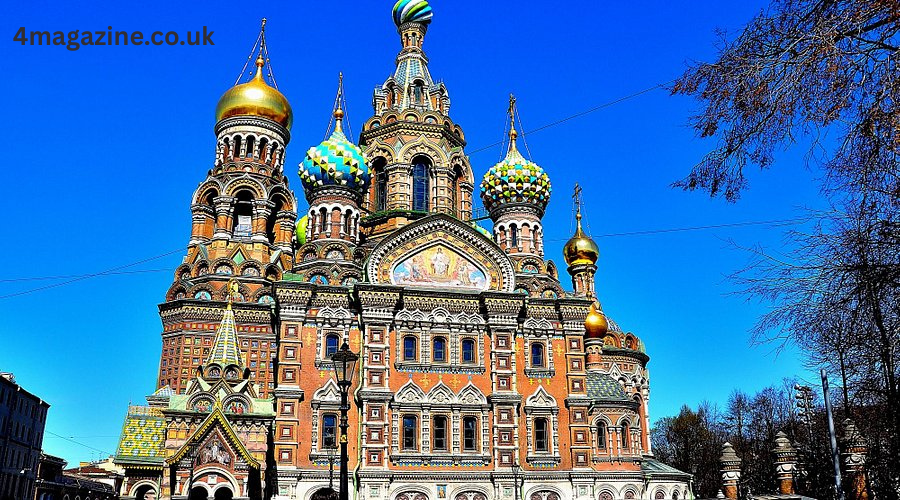
Few landmarks in Russia command as much visual admiration and historical reflection as the Saviour of Spilled Blood St Petersburg. Rising dramatically along the Griboedov Canal, this ornate church captivates visitors with its dazzling mosaics, vibrant onion domes, and deeply symbolic origins. It stands not only as a masterpiece of Russian architecture but also as a solemn tribute to a pivotal moment in the nation’s imperial history.
The church is more than a picturesque attraction. It represents political transformation, spiritual devotion, and artistic excellence intertwined within one structure. Understanding its significance requires exploring its origins, design philosophy, cultural symbolism, and enduring legacy.
The Historical Origins of the Church
The Saviour of Spilled Blood St Petersburg was built on the exact site where Emperor Alexander II was fatally wounded in 1881. The emperor, often remembered for emancipating the serfs in 1861, became the target of revolutionary forces seeking political change. His assassination shocked the Russian Empire and deeply affected his successor, Alexander III.
Determined to commemorate his father, Alexander III commissioned the construction of a memorial church at the location of the attack. Construction began in 1883 and continued for more than two decades, concluding in 1907 during the reign of Nicholas II. The project required immense financial investment and national involvement, reflecting the political and emotional importance attached to the monument.
Unlike many other churches in St Petersburg, which follow Western European architectural styles, this church intentionally embraced traditional Russian design. The decision symbolized a cultural shift and a reaffirmation of Russian identity during a time of political uncertainty.
Architectural Style and Design Influences
The visual identity of the Saviour of Spilled Blood St Petersburg immediately distinguishes it from surrounding buildings. While much of St Petersburg reflects neoclassical and baroque influences introduced during the reign of Peter the Great, this church evokes medieval Russian architecture.
Inspiration from Historic Russian Churches
The structure draws clear inspiration from the iconic Saint Basil’s Cathedral in Moscow. Its colorful domes, intricate ornamentation, and asymmetrical composition reflect traditional Russian Orthodox architecture from the sixteenth and seventeenth centuries. By adopting this style, the designers created a symbolic connection between imperial Russia and its earlier spiritual heritage.
The church features nine domes, each uniquely decorated with enamel and patterned tiles. These domes create a vibrant skyline presence, particularly when illuminated against the often-gray northern sky of St Petersburg. The exterior walls display elaborate brickwork and decorative details that enhance the building’s ornate character.
Interior Mosaic Mastery
Inside, the church reveals one of the most extensive mosaic collections in Europe. Covering more than 7,000 square meters, the mosaics depict biblical scenes, saints, and religious narratives with extraordinary detail and color depth. Prominent Russian artists contributed to the designs, blending spiritual storytelling with technical precision.
The preservation of the exact cobblestone section where Alexander II was wounded forms a central feature within the interior. This preserved site reinforces the church’s role as a memorial rather than simply a place of worship. The architectural design therefore integrates historical remembrance into its sacred environment.
Political and Cultural Significance
The Saviour of Spilled Blood St Petersburg stands at the intersection of religion and politics. Its very existence emerged from a moment of violent political upheaval. By constructing such a grand monument, the imperial government sought to reinforce the legitimacy of the monarchy and honor the memory of the fallen emperor.
The church also symbolized resistance against revolutionary ideology. At a time when radical political movements were gaining influence, the monument projected stability, tradition, and spiritual continuity. Its design conveyed the message that Russian identity remained rooted in Orthodoxy and historical heritage.
During the Soviet era, the church faced uncertainty. Religious institutions were frequently repurposed or destroyed under state atheism. The building avoided demolition but endured periods of neglect and alternative uses, including serving as a storage facility. Only in the late twentieth century did restoration efforts fully revive its architectural splendor.
Restoration and Modern Relevance
After decades of deterioration, extensive restoration began in the 1970s and continued for many years. Experts painstakingly cleaned mosaics, repaired structural damage, and restored decorative elements to their original brilliance. The restoration project required careful historical research and advanced conservation techniques.
Today, the Saviour of Spilled Blood St Petersburg operates primarily as a museum rather than an active parish church. Visitors from around the world explore its interior to admire the artistry and learn about its historical context. The building has become one of the most photographed landmarks in Russia.
Its location along the canal further enhances its appeal. Reflections of its colorful domes shimmer in the water, creating postcard-perfect scenes throughout the year. During winter, snow accentuates its intricate details, while summer sunlight highlights its vivid hues.
Artistic Achievement and Symbolism
Beyond its political associations, the church represents a remarkable achievement in decorative arts. The mosaic program alone demonstrates an extraordinary level of craftsmanship. Each piece of colored glass contributes to complex religious imagery that maintains clarity even when viewed from a distance.
The themes depicted inside emphasize redemption, sacrifice, and divine authority. These messages align closely with the church’s memorial purpose. By framing the emperor’s death within a religious narrative of sacrifice, the structure transforms a political tragedy into a spiritual statement.
The use of traditional Russian motifs reinforces national identity. Floral patterns, geometric designs, and ornamental borders create a visual language deeply rooted in regional artistic traditions. This stylistic choice contrasts sharply with the European-inspired architecture that dominates much of St Petersburg’s urban landscape.
The Church in the Context of St Petersburg
St Petersburg is often described as Russia’s “window to Europe.” Founded by Peter the Great, the city reflects Western architectural principles and urban planning. Palaces, broad avenues, and classical façades define much of its aesthetic character.
Against this backdrop, the Saviour of Spilled Blood St Petersburg appears almost unexpected. Its medieval Russian appearance contrasts with nearby neoclassical landmarks. This contrast enhances its visual impact and underscores its symbolic purpose as a reaffirmation of Russian heritage.
The church’s presence enriches the city’s cultural diversity. Visitors exploring the Hermitage Museum or strolling along Nevsky Prospect inevitably encounter this striking monument. Its bold design leaves a lasting impression and often becomes a highlight of any visit to the city.
Tourism and Global Recognition
In modern times, the Saviour of Spilled Blood St Petersburg plays a significant role in Russia’s tourism industry. International travelers frequently include it in their itineraries. Its distinctive architecture makes it instantly recognizable in travel photography and promotional materials.
The church also appears in documentaries, travel guides, and historical studies focusing on imperial Russia. Its narrative connects art, politics, and religion in a single compelling story. This multidimensional appeal contributes to its sustained popularity.
Educational tours often emphasize the historical events surrounding Alexander II’s assassination. By linking architectural beauty with dramatic history, the site offers visitors a layered experience that goes beyond visual admiration.
Enduring Legacy
The Saviour of Spilled Blood St Petersburg endures as a testament to resilience. It survived political revolution, ideological shifts, wartime hardship, and decades of neglect. Its restoration symbolizes a broader revival of interest in Russia’s cultural and religious heritage.
Today, the church stands not merely as a memorial to a fallen emperor but as an embodiment of national memory. It reflects the complexities of Russian history, where art and politics frequently intertwine. The monument invites contemplation about power, sacrifice, and identity.
Conclusion
The Saviour of Spilled Blood St Petersburg remains one of the most extraordinary architectural landmarks in Russia. Born from tragedy, shaped by artistic ambition, and preserved through perseverance, it continues to captivate both scholars and travelers. Its vibrant domes and intricate mosaics tell a story that transcends a single historical moment. They speak of faith, national pride, and cultural continuity.
As visitors step inside and gaze upon its shimmering mosaics, they encounter more than decorative splendor. They witness a monument that bridges past and present, grief and beauty, politics and spirituality. Through its enduring presence along the canal, the Saviour of Spilled Blood St Petersburg affirms its place as a masterpiece of memory and artistic devotion.
