

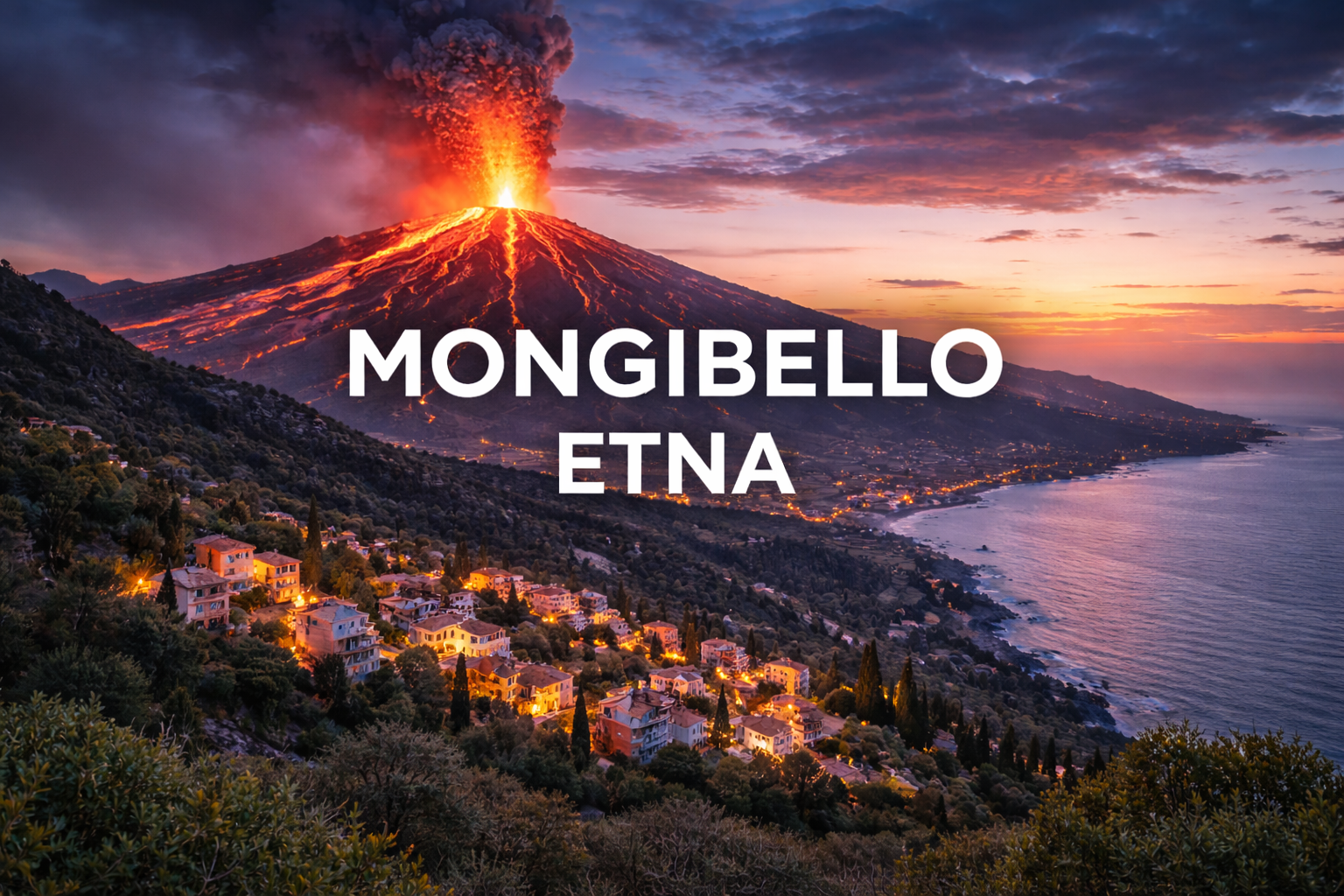
Mount Etna is one of the most studied and visited volcanoes in the world, yet many people encounter it first through an older, more poetic name: Mongibello Etna. This name carries centuries of history, myth, and observation, reflecting how humans have tried to understand a mountain that is never truly at rest.
Today, Mongibello Etna refers not only to a physical place but also to a cultural idea shaped by language, geology, and lived experience. Exploring this term helps clarify why Etna remains so important in science, history, and everyday Sicilian life.
The Meaning and Origins of the Name
Etymology of Mongibello
The word Mongibello is generally believed to be a layered name. Many scholars suggest it combines the Latin word mons, meaning mountain, with the Arabic jabal, also meaning mountain. The result is a name that literally translates to “mountain mountain,” a reflection of how different cultures described the same imposing landmark.
This linguistic overlap emerged during periods when Sicily was influenced by Roman, Byzantine, Arab, and Norman rule. Each culture added its own language and perspective, yet the mountain remained central to all of them.
How Mongibello Became Linked to Etna
Over time, Mongibello became closely associated with Mount Etna itself. Locals used the name to describe the volcano not just as a geological feature but as a presence with personality and power. The pairing of Mongibello Etna emphasizes both familiarity and awe.
Rather than replacing the name Etna, Mongibello exists alongside it, offering a more traditional and emotionally charged way to refer to the volcano.
Geological Identity of Mongibello Etna
A Living Stratovolcano
From a scientific perspective, Mongibello Etna is a massive stratovolcano formed by countless eruptions over hundreds of thousands of years. Layers of lava, ash, and rock have built up its cone, giving it a complex internal structure.
Unlike dormant volcanoes, Etna remains active, with frequent eruptions that reshape its slopes. This constant change is part of what has made it so fascinating to researchers and residents alike.
Why Etna Is Always Changing
Mongibello Etna sits on a tectonically active zone where the African and Eurasian plates interact. Magma rises through fractures in the Earth’s crust, feeding both summit craters and flank eruptions.
Because of this, the volcano does not erupt in a single, predictable way. Some eruptions are gentle lava flows, while others involve ash clouds and explosive activity. Each event subtly alters the mountain’s appearance.
Mongibello Etna in Myth and Legend
Ancient Beliefs and Stories
Long before modern geology, people explained Mongibello Etna through myth. In Greek mythology, the giant Typhon was said to be trapped beneath the mountain, his movements causing eruptions and earthquakes.
Ancient writers imagined his forge deep inside the volcano, where he crafted weapons for the gods. These stories reveal how early societies used narrative to explain natural forces they could not control.
Medieval and Local Folklore
As centuries passed, myths evolved into local legends. Some stories portrayed Mongibello Etna as a guardian of Sicily, while others described it as a sleeping giant that could awaken without warning.
These tales were often shaped by real events, such as destructive eruptions or periods of calm. Folklore became a way to pass down collective memory and practical wisdom about living near the volcano.
Cultural Importance in Sicilian Life
The Mountain as a Daily Presence
For many Sicilians, Mongibello Etna is not a distant landmark but a constant companion. It dominates the skyline, influences weather patterns, and even affects daily routines.
Farmers, fishermen, and city dwellers alike keep an eye on the mountain. Changes in smoke, color, or sound are noticed and discussed, showing how deeply embedded Etna is in everyday awareness.
Art, Language, and Identity
Mongibello Etna appears frequently in Sicilian art, poetry, and music. Painters have tried to capture its shifting moods, while writers have used it as a symbol of endurance, danger, or renewal.
The name Mongibello itself carries emotional weight. Using it can signal local knowledge, tradition, and respect for the mountain’s long history.
Environmental Impact of Mongibello Etna
Fertile Land Shaped by Fire
One of the most striking aspects of Mongibello Etna is the fertility of its slopes. Lava and volcanic ash break down into mineral-rich soil that supports agriculture.
Vineyards, orchards, and olive groves thrive in areas shaped by past eruptions. This cycle of destruction and renewal has allowed communities to rebuild and adapt repeatedly.
Risks and Natural Challenges
Despite its benefits, living near Mongibello Etna involves real risks. Lava flows can destroy homes and infrastructure, while ashfall can disrupt transportation and health.
Modern monitoring systems help reduce danger, but the volcano remains unpredictable. Balancing opportunity and risk is an ongoing challenge for those who live nearby.
Scientific Study and Global Significance
Why Researchers Focus on Etna
Mongibello Etna is one of the most closely monitored volcanoes on Earth. Its frequent activity provides scientists with valuable data about volcanic processes.
By studying Etna, researchers can improve eruption forecasting, understand magma movement, and develop better risk management strategies. Insights gained here often apply to volcanoes worldwide.
A Natural Laboratory
The accessibility of Mongibello Etna makes it a unique natural laboratory. Scientists can observe eruptions up close, collect samples, and test new monitoring technologies.
This combination of activity and accessibility has made Etna a reference point in volcanology, shaping how experts understand active volcanoes.
Mongibello Etna and Tourism Awareness
Learning Through Responsible Visits
Many visitors are drawn to Mongibello Etna out of curiosity and respect rather than thrill-seeking. Guided walks, educational centers, and local museums help explain the volcano’s history and behavior.
When approached thoughtfully, visiting the mountain can deepen understanding of natural forces and human adaptation.
Respecting a Powerful Landscape
Awareness is essential when exploring Mongibello Etna. Conditions can change quickly, and restricted zones exist for safety reasons.
Responsible engagement focuses on learning and observation, recognizing that the mountain is not a static attraction but a dynamic environment.
The Name Mongibello in Modern Context
Why the Name Still Matters
In an age of scientific terminology and satellite monitoring, the name Mongibello Etna might seem old-fashioned. Yet it continues to matter because it reflects how people relate emotionally and culturally to the volcano.
The name reminds us that understanding a place involves more than data. It includes memory, language, and shared experience.
Bridging Past and Present
Using Mongibello Etna connects ancient perceptions with modern knowledge. It acknowledges that while science explains how the volcano works, history explains how humans have lived with it.
This bridge between past and present enriches our understanding of both the mountain and the people shaped by it.
Conclusion
Mongibello Etna is far more than a geological feature. It is a symbol shaped by language, myth, science, and daily life. The name itself tells a story of cultural layering, reflecting centuries of observation and adaptation.
By exploring Mongibello Etna, we gain insight into how humans interpret powerful natural forces. It stands as a reminder that landscapes are not just physical spaces but living narratives, continuously shaped by nature and human experience.
