

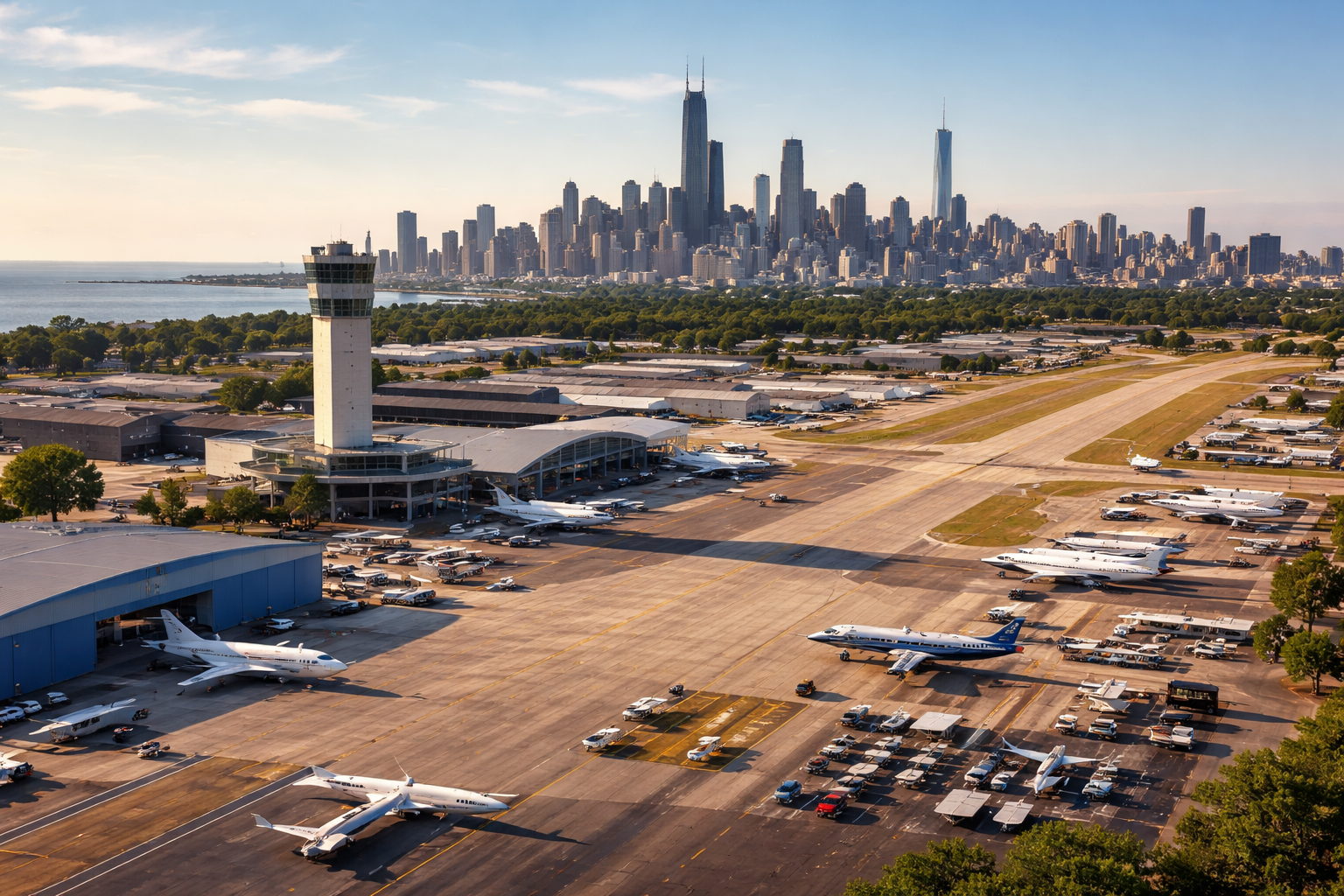
The aviation history of the United States includes many airports that played important roles in regional development and transportation. One such example is KCGX Airport, a code historically linked with a unique urban airfield that once served the heart of one of America’s largest cities. Although it no longer operates today, the story of KCGX airport remains an important chapter in aviation history. The airport provided a convenient gateway for business travelers, private pilots, and visitors who wanted fast access to downtown Chicago.
Located along the shoreline of Lake Michigan, this airport stood out because of its rare position in a dense urban environment. Its rise, operation, and eventual closure illustrate how city planning, politics, and aviation needs can intersect. Understanding the background of KCGX airport helps explain how urban airports function and why some disappear while others continue to grow.
What Was KCGX Airport?
KCGX was the ICAO code assigned to Meigs Field, a small but highly significant airport located near downtown Chicago. The airport served primarily general aviation rather than large commercial airlines. Business jets, private aircraft, and flight training operations commonly used its facilities.
Meigs Field was situated on a narrow strip of land extending into Lake Michigan. This location allowed aircraft to land very close to the city’s financial district, making it extremely convenient for executives and travelers who needed quick access to downtown offices and hotels.
Although relatively small, the airport gained international recognition because few major cities had such a centrally located runway. Its unique position made KCGX airport both valuable and controversial throughout its existence.
The Early History of Meigs Field
The idea for Meigs Field began in the mid-20th century, when city leaders wanted to create an airport that could support business aviation in downtown Chicago. Construction started after World War II, and the airport officially opened in 1948.
Meigs, a publisher who supported aviation development in the region. At the time, aviation was expanding quickly across the United States, and cities were looking for ways to integrate air travel into urban infrastructure.
During its early decades, KCGX airport became a hub for corporate aircraft and general aviation pilots. Its single runway was sufficient for small jets and propeller aircraft, which were the primary users of the airport. The facility also hosted aviation events, training operations, and emergency services.
Because of its central location, Meigs Field offered something few airports could provide: a landing spot only minutes from downtown Chicago’s business district.
Geographic Importance and Location
One of the defining features of KCGX airport was its location on Northerly Island. The narrow peninsula extended into Lake Michigan, creating a scenic and strategic place for a runway.
From the air, pilots approaching Meigs Field experienced impressive views of Chicago’s skyline. The landing approach often passed over water before touching down on the runway aligned along the island.
First, the airport reduced travel time to downtown offices and conference centers. Travelers could land and reach the city center in minutes rather than spending an hour traveling from distant airports.
Second, the surrounding water minimized noise impact compared to airports located within residential neighborhoods.
Finally, the airport became a recognizable landmark for pilots and aviation enthusiasts.
Business Aviation
Although large commercial airlines operated from major airports like O’Hare, KCGX airport served a different purpose. It focused on general aviation and corporate flights.
Many businesses valued the efficiency of landing near downtown Chicago. Executives could attend meetings, conferences, or events without the long travel times associated with larger airports.
In addition to business aviation, Meigs Field supported several other activities. Flight schools trained new pilots using its facilities. Emergency medical flights occasionally used the runway for quick transport. Private aircraft owners stored and maintained their planes there as well.
Because of these functions, the airport contributed to Chicago’s business ecosystem and supported aviation training in the region.
Cultural and Aviation Significance
Beyond its operational role, KCGX airport became well known among pilots worldwide. Aviation magazines frequently featured the airport because of its urban setting and scenic approach.
The airport also gained recognition through flight simulation software. Many early flight simulators included Meigs Field as a default starting location, introducing countless virtual pilots to the Chicago skyline.
For many aviation enthusiasts, Meigs Field symbolized the connection between city life and personal aviation. It showed how small aircraft could operate efficiently within a large metropolitan environment.
This cultural impact helped preserve the airport’s memory even after its closure.
The Controversy Surrounding Its Closure
Despite its usefulness, Meigs Field faced ongoing debates about land use and urban development. Some city leaders believed the land could serve better as public park space rather than an airport.
In 2003, the airport’s fate changed dramatically. Under the direction of Richard M. Daley, the runway was abruptly closed overnight. Construction crews cut large X-shaped trenches across the runway, making it impossible for aircraft to land.
This unexpected action sparked strong reactions from pilots, aviation groups, and government agencies. Critics argued that the closure ignored federal aviation procedures and eliminated a valuable transportation facility.
Supporters of the decision believed that converting the area into public parkland would benefit the city’s residents.
Regardless of opinion, the sudden closure became one of the most controversial events in modern U.S.
Transformation into Public Parkland
Today, the area is managed by the Chicago Park District and has been transformed into green parkland and event areas.
The former runway area now forms part of a scenic lakefront park. Walking paths, gardens, and open spaces replaced the airport infrastructure. Visitors can enjoy views of Lake Michigan and Chicago’s skyline while walking through the area.
Although aircraft no longer operate there, the site continues to attract tourists and residents who appreciate its natural beauty.
The transformation reflects a broader trend in urban planning, where some former industrial or transportation spaces are converted into parks and recreational zones.
The Legacy of KCGX Airport
Even though KCGX airport no longer exists as an operating airfield, its legacy remains significant. Aviation historians often study Meigs Field as an example of how urban airports can both support and challenge city development.
The airport demonstrated several important lessons. First, location can make an airport extremely valuable, especially for business aviation. Second, urban land use decisions can greatly influence the future of transportation infrastructure.
Finally, the story highlights how aviation facilities can become part of cultural memory. Many pilots still remember landing at Meigs Field as a unique and unforgettable experience.
Today, aviation enthusiasts continue to discuss the airport in forums, books, and documentaries. Its sudden closure remains a frequently cited example of the complex relationship between aviation and politics.
Conclusion
The story of KCGX airport is more than the history of a small runway in Chicago. It represents an era when cities experimented with integrating aviation directly into urban environments. Through its decades of operation, Meigs Field served business travelers, pilots, and aviation students while offering one of the most scenic airport approaches in the United States.
Its closure in 2003 marked the end of a distinctive chapter in aviation history. Yet the legacy of the airport continues through historical records, pilot stories, and the park that now occupies its former site.
Understanding the rise and fall of KCGX airport provides valuable insight into urban planning, transportation policy, and aviation development. Even though the runway has disappeared, the impact of this remarkable airport remains part of Chicago’s aviation heritage and the broader story of American flight.
