

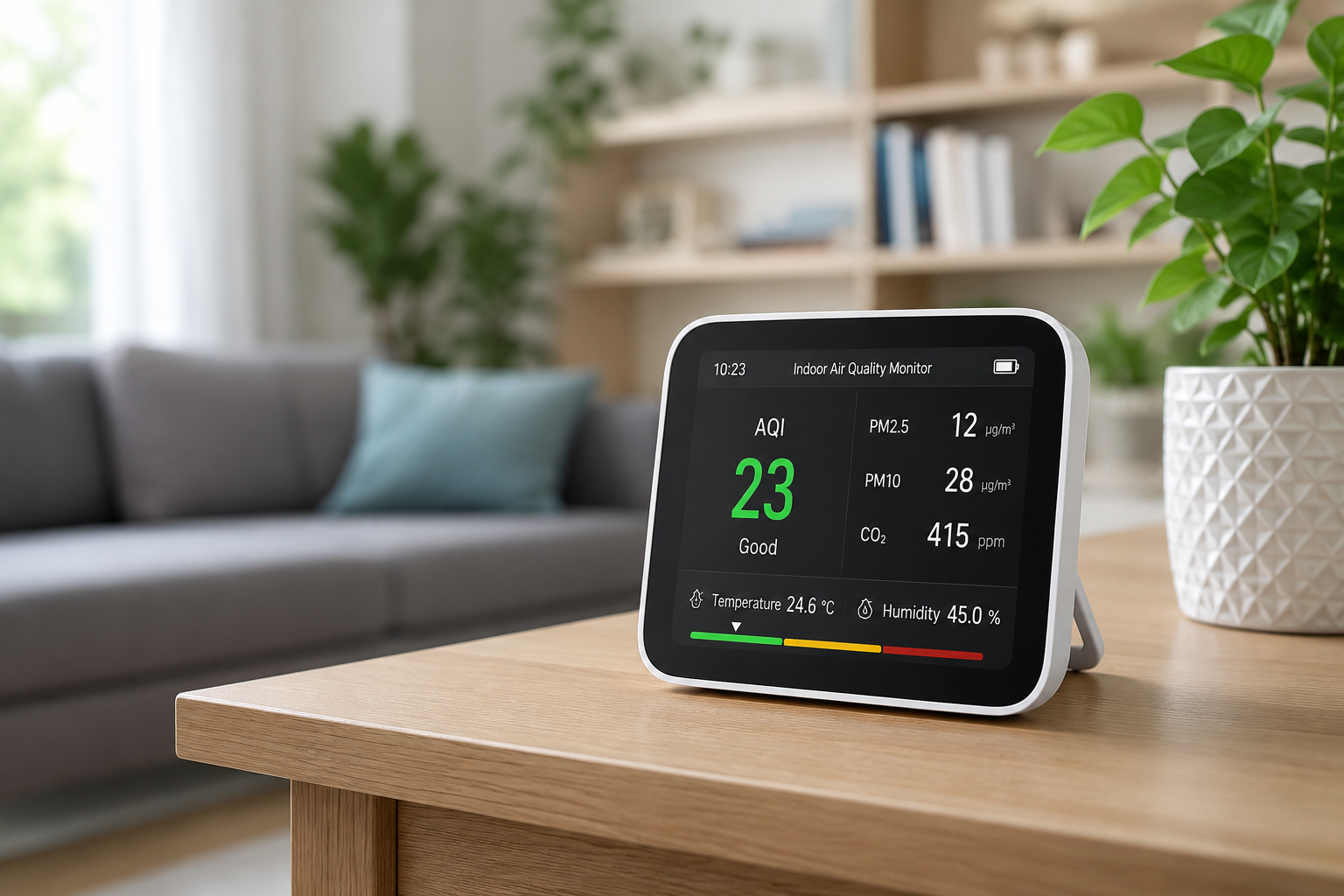
The air inside your home, office, or other indoor spaces has a direct impact on your health and comfort. While many people focus on outdoor pollution, indoor air can sometimes contain even higher levels of harmful pollutants. Dust, volatile organic compounds (VOCs), carbon dioxide, mold spores, pet dander, and other airborne particles may accumulate without obvious signs. This is where an Indoor Air Quality Monitor becomes an essential tool.
An indoor air quality monitor helps you understand what you are breathing every day. Instead of guessing whether the air is clean, you receive real-time information about various pollutants and environmental conditions. This knowledge allows you to take practical steps that improve the quality of the air around you. Whether you live in a busy city, work from home, or simply want a healthier indoor environment, investing in better air monitoring can make a noticeable difference.
What Is an Indoor Air Quality Monitor?
An Indoor Air Quality Monitor is a device designed to measure and report the condition of indoor air. Depending on the model, it can detect several environmental factors, including particulate matter (PM2.5 and PM10), carbon dioxide (CO₂), volatile organic compounds (VOCs), temperature, humidity, and sometimes formaldehyde or radon.
The monitor collects data through built-in sensors and displays the results on a screen or through a connected smartphone application. Many modern devices also provide alerts when air quality drops below recommended levels, allowing users to respond quickly.
Rather than replacing an air purifier or ventilation system, the monitor works as a guide that helps you understand when action is necessary.
Why Indoor Air Quality Matters
Homes, offices, schools, and commercial buildings all have unique sources of indoor pollution. Cooking, cleaning products, furniture, paints, smoke, candles, and poor ventilation can all contribute to reduced air quality.
Poor indoor air quality may lead to symptoms such as headaches, eye irritation, fatigue, allergies, coughing, and difficulty concentrating. Individuals with asthma or other respiratory conditions are often more sensitive to airborne pollutants.
Maintaining clean indoor air supports overall well-being, improves comfort, and may help reduce exposure to harmful contaminants over time.
Common Pollutants Detected by Air Quality Monitors
Particulate Matter (PM2.5 and PM10)
Fine dust particles are among the most important pollutants measured by many monitors. PM2.5 particles are especially concerning because they are small enough to enter deep into the lungs. Sources include cooking, smoke, candles, and outdoor pollution entering the home.
Carbon Dioxide (CO₂)
Carbon dioxide levels increase in enclosed spaces with limited ventilation. High CO₂ concentrations do not usually indicate toxic conditions but may contribute to drowsiness, poor concentration, and discomfort. Monitoring these levels helps users know when to improve ventilation.
Volatile Organic Compounds (VOCs)
VOCs are gases released from paints, furniture, cleaning products, air fresheners, adhesives, and many household materials.
Humidity
Humidity affects both comfort and health. Excess moisture encourages mold growth, while very dry air may irritate the skin, throat, and respiratory system. Many monitors include humidity sensors to help maintain an ideal indoor environment.
Temperature
Temperature influences indoor comfort and can affect humidity levels as well. Monitoring both together provides a more complete picture of indoor conditions.
Benefits of Using an Indoor Air Quality Monitor
One of the biggest advantages of using an Indoor Air Quality Monitor is awareness. Invisible pollutants often go unnoticed until they begin affecting health or comfort. Real-time measurements remove the guesswork.
The monitor also supports healthier daily habits. For example, users can open windows when carbon dioxide levels rise, reduce humidity to prevent mold growth, or identify activities that generate excessive airborne particles.
Families with children, older adults, or individuals with allergies often find monitoring especially useful because these groups may be more vulnerable to poor air quality.
In addition, many smart monitors store historical data. This feature allows users to identify trends and understand how seasonal changes, weather, or household activities affect indoor air over time.
Features to Look for Before Buying
Not every monitor offers the same capabilities.
Accurate Sensors
Reliable sensors are the foundation of any quality monitoring device. Look for products that use well-tested sensing technology and provide consistent readings.
Multiple Air Quality Measurements
A monitor that measures several environmental factors provides a more complete understanding of indoor conditions than one measuring only temperature or humidity.
Real-Time Updates
Fast updates help users respond quickly when pollution levels increase after cooking, cleaning, or other indoor activities.
Easy-to-Read Display
Clear displays with color indicators or simple air quality indexes make interpreting results easier for every family member.
Where Should You Place an Air Quality Monitor?
Proper placement significantly improves measurement accuracy. Position the monitor in a frequently occupied room, such as a living room, bedroom, or home office.
Avoid placing the device directly beside windows, air vents, cooking appliances, or humidifiers because these locations may produce temporary readings that do not represent the overall indoor environment.
If your home has multiple floors or separate living areas, additional monitors can provide a more complete understanding of air quality throughout the building.
How to Improve Indoor Air Quality
Monitoring is only the first step. Once you understand your indoor air conditions, several practical measures can help improve them.
Increase natural ventilation whenever outdoor air quality is suitable. Regularly replace HVAC filters according to manufacturer recommendations. Use kitchen exhaust fans during cooking and bathroom fans after showers to reduce moisture.
Keeping your home clean also helps reduce dust and allergens. Vacuuming with high-efficiency filters, minimizing indoor smoking, and maintaining proper humidity levels all contribute to healthier indoor air.
Air purifiers equipped with HEPA filters can further reduce airborne particles, particularly in homes affected by allergies or high dust levels.
Who Can Benefit Most?
Although everyone can benefit from cleaner indoor air, certain groups may experience greater advantages from continuous monitoring.
Families with young children often want to create healthier sleeping and play environments. Older adults may appreciate improved comfort, especially if they have existing respiratory concerns.
People working remotely spend long hours indoors, making air quality an important factor in productivity and concentration. Schools, offices, healthcare facilities, and small businesses can also use monitoring to maintain healthier indoor environments.
Pet owners may also benefit because pet hair and dander contribute to airborne particles that affect sensitive individuals.
Common Misconceptions
Some people believe that if indoor air smells fresh, it must be clean. Unfortunately, many harmful pollutants are odorless and invisible. An unpleasant smell may indicate a problem, but the absence of odor does not guarantee healthy air.
Another misconception is that air purifiers eliminate every indoor pollutant automatically. While purifiers help remove many particles, they do not solve every issue. Monitoring helps identify specific problems and supports informed decisions about ventilation, humidity, and purification.
Finally, some homeowners assume air quality only becomes important during wildfire seasons or periods of heavy outdoor pollution. In reality, everyday household activities continuously influence indoor air quality throughout the year.
Maintaining Your Air Quality Monitor
Like many electronic devices, an air quality monitor performs best with regular maintenance. Follow the manufacturer’s recommendations for cleaning the device and updating its software if applicable.
Keep sensors free from dust accumulation and avoid exposing the monitor to excessive moisture unless specifically designed for such conditions. Periodically comparing readings with known environmental changes can also help ensure consistent performance.
Proper maintenance extends the device’s lifespan and helps maintain reliable measurements over time.
Conclusion
An Indoor Air Quality Monitor offers valuable insight into one of the most important aspects of everyday health—the air you breathe. By measuring pollutants, humidity, temperature, and ventilation conditions, it enables informed decisions that create cleaner and more comfortable indoor spaces.
Whether you want to reduce allergens, improve ventilation, or simply understand your home’s environment better, continuous air quality monitoring provides practical information you can use every day. Combined with good ventilation, regular cleaning, proper filtration, and healthy household habits, an indoor air quality monitor becomes an important part of maintaining a healthier indoor lifestyle for you and your family.
