

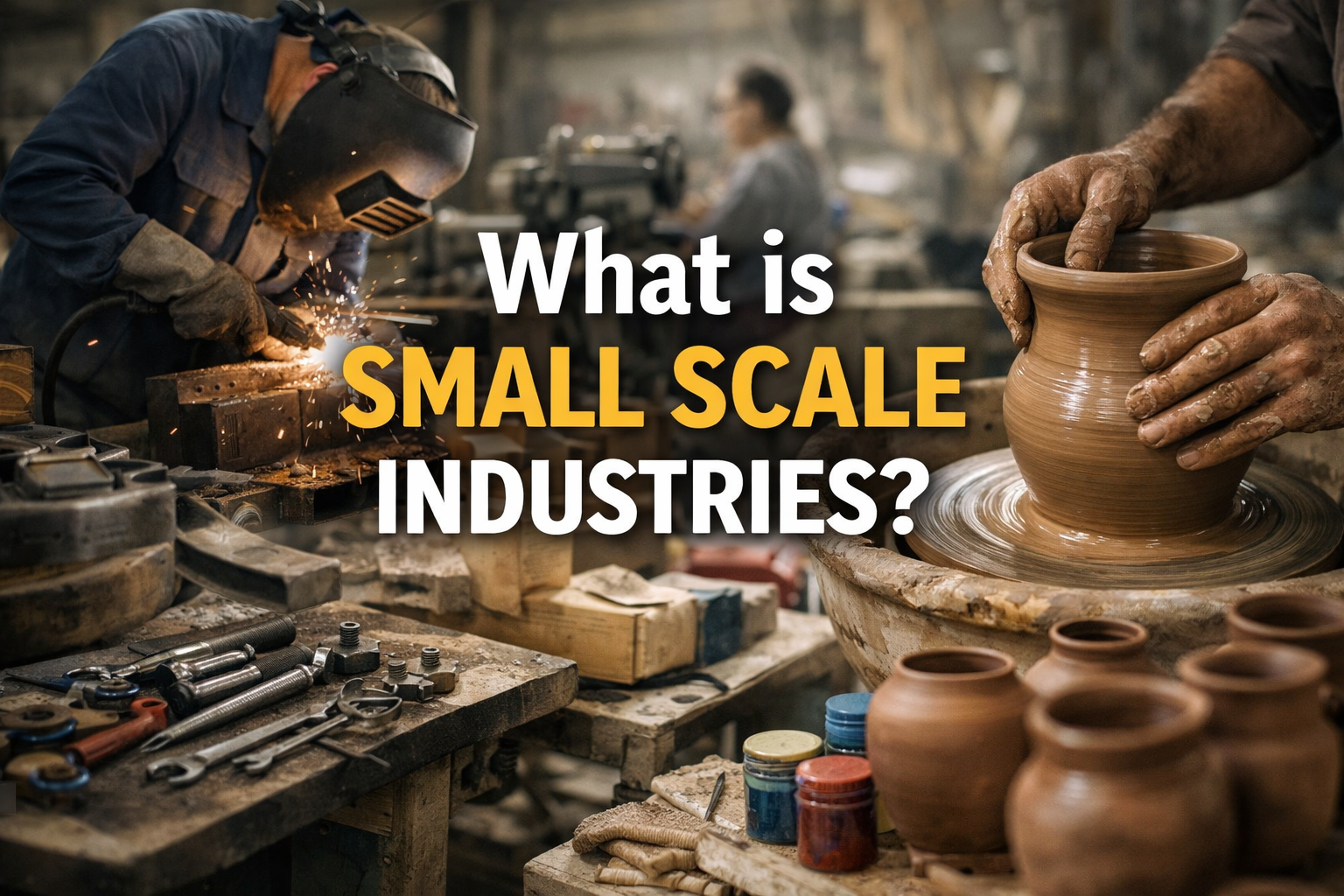
Small scale industries play a vital role in the growth and stability of an economy. They provide employment, encourage entrepreneurship, and help in balanced regional development. Many people often ask, what is small scale industries and why they matter so much. Understanding this concept is important, especially in developing economies where these industries act as the backbone of industrial activity.
This article explains the meaning, features, importance, advantages, challenges, and future of small scale industries in a clear and simple way. It aims to give you a complete understanding while keeping the content easy to read and informative.
What Is Small Scale Industries?
Small scale industries refer to businesses that operate on a small level with limited capital investment, workforce, and production capacity. These industries usually use simple technology and are often managed by individuals or small groups.
In simple terms, when people ask what is small scale industries, the answer is that they are businesses that produce goods or provide services on a smaller scale compared to large industries. They are commonly found in both urban and rural areas and often focus on local markets.
Key Characteristics of Small Scale Industries
Limited Investment
One of the main features is low capital investment. These industries do not require large amounts of money to start or operate, which makes them accessible to many people.
Small Workforce
Small scale industries employ a limited number of workers. This makes management easier and allows close supervision of operations.
Simple Technology
They often rely on basic tools and machinery instead of advanced or expensive technology. This reduces production costs and makes operations more manageable.
Local Market Focus
Most small scale industries serve local or regional markets. They produce goods based on local demand and preferences.
Flexible Operations
These industries can easily adapt to changes in market demand. Their small size allows quick decision-making and flexibility in production.
Types of Small Scale Industries
Manufacturing Industries
These industries produce goods such as textiles, food products, handicrafts, and furniture. They are one of the most common forms.
Service Industries
Service-based small businesses include repair shops, salons, and small IT services.
Cottage Industries
Examples include handmade crafts, weaving, and pottery.
Agro-Based Industries
These industries depend on agricultural products. Examples include dairy processing, food preservation, and oil extraction.
Importance of Small Scale Industries
Employment Generation
Small scale industries create job opportunities for a large number of people. They help reduce unemployment, especially in rural areas.
Encouragement of Entrepreneurship
They provide a platform for individuals to start their own businesses with limited resources. This encourages innovation and self-employment.
Balanced Regional Development
These industries can be set up in rural and less-developed areas. This reduces migration to cities and supports local development.
Contribution to Economy
Small scale industries contribute significantly to the economy by producing goods, exporting products, and generating income.
Support to Large Industries
They often supply parts, components, or services to larger industries, creating a strong industrial network.
Advantages of Small Scale Industries
Low Investment Requirement
Starting a small scale industry does not require huge capital.
Quick Decision-Making
Owners can make decisions quickly without complex management structures. This improves efficiency.
Personalized Customer Service
Small businesses can build strong relationships with customers by offering personalized services.
Use of Local Resources
They utilize locally available materials and labor, which reduces costs and supports the local economy.
Flexibility
Small scale industries can easily change their production methods or products according to market trends.
Challenges Faced by Small Scale Industries
Limited Access to Finance
Many small businesses struggle to get loans or financial support from banks and institutions.
Lack of Advanced Technology
Using outdated tools and machinery can reduce productivity and competitiveness.
Marketing Difficulties
Small scale industries often find it hard to promote their products and compete with large brands.
Skilled Labor Shortage
Finding trained and skilled workers can be a challenge for small businesses.
Regulatory Issues
Complying with government rules and regulations can be difficult due to limited resources and knowledge.
Role of Government in Supporting Small Scale Industries
Governments play a crucial role in the growth of small scale industries. They provide financial assistance, training programs, and subsidies to help these businesses grow.
Policies such as tax benefits, easy loan schemes, and infrastructure development encourage more people to start small businesses. Training programs also help improve skills and productivity.
Future of Small Scale Industries
The future of small scale industries looks promising. With the rise of digital technology, even small businesses can reach global markets. Online platforms allow them to sell products beyond their local areas.
Innovation and creativity are also driving growth. Many small businesses are now focusing on unique products and sustainable practices. This helps them stand out in a competitive market.
However, to succeed in the future, small scale industries must adopt modern technology, improve quality, and focus on customer needs.
Conclusion
Understanding what is small scale industries helps us realize their importance in economic and social development. These industries are not just small businesses; they are powerful drivers of growth, employment, and innovation.
They offer many advantages, including low investment, flexibility, and strong community connections. At the same time, they face challenges such as limited finance and competition from larger industries.
With proper support from the government and adoption of modern practices, small scale industries can continue to grow and contribute significantly to the economy. Their role will remain essential in building a balanced and sustainable future.
